


Humanity is facing big challenges that need new solutions. Issues like climate change and health gaps require fresh ideas.
Technology has the power to change things for the better. The Tech for Good movement started in 2006. It has inspired companies around the world to use their skills for good.
Today, businesses are using their knowledge to help the planet and people. This change is a big step towards solving complex problems.
Programmes like IE University’s Tech for Good initiative show how technology can help society. They prove that working together can make a big difference.
Tomorrow’s solutions are being built today through collaborative innovation and purposeful design. The next parts will look at how technology is changing our world.
The Intersection of Technology and Global Challenges
Global crises like climate change and healthcare disparities need advanced tech solutions. These problems are complex and can’t be fixed by old methods alone. We need new ideas and tech to tackle them fast.
Companies worldwide see tech as a key to improving society, not just making money. They use their tech skills to help the planet and support the UN’s Sustainable Development Goals digitally.
Defining Our Most Pressing Global Issues
We face many crises that threaten our future. Climate change is a big one, causing extreme weather and harming our planet. Healthcare and food security issues also affect many people.
Economic inequality is making things worse, causing social problems and limiting chances for the poor. These issues are linked, making it hard to find simple solutions.
Related Posts:
- Is Technology Making Life Better or Worse The Great Debate

- What Are Some Types of Technology A Guide to Tech Categories
- The Disadvantages of Technology in the Workplace…

- How Technology Contributed to Globalization…

- What Came First Science or Technology A Historical…

- How Technology Impacts Teaching and Learning Modern…

The UN’s 17 Sustainable Development Goals help us understand these problems. They cover everything from poverty to climate action. Digital tech is key to achieving these goals in all areas.
| Global Challenge | Primary Impacts | Current Status | Technological Solutions Needed |
|---|---|---|---|
| Climate Change | Extreme weather, sea-level rise, biodiversity loss | Accelerating despite international agreements | Carbon capture, renewable energy systems, climate modelling |
| Healthcare Disparities | Unequal access to treatments, preventive care shortages | Worsening in developing regions | Telemedicine platforms, diagnostic AI, mobile health services |
| Food Security | Malnutrition, crop failures, supply chain disruptions | Increasingly volatile due to climate impacts | Precision agriculture, drought-resistant crops, distribution optimisation |
| Economic Inequality | Wealth concentration, limited upward mobility | Growing globally across metrics | Digital financial inclusion, remote work platforms, education access |
The Role of Innovation in Addressing These Challenges
Technology is our best hope for solving these big problems. New innovation solutions can make a big difference. Companies that use tech for good often find it profitable too.
Digital tech can help a lot with the Sustainable Development Goals. For example, mobiles can teach people in remote areas, and AI can help in emergencies. This shows how tech can make big changes.
Good innovation solutions come from working together. This means tech experts, experts in different fields, and local people. This way, solutions really meet needs and respect local cultures and the environment.
Programmes like the World Economic Forum’s Technology Pioneers show companies making a difference. They use tech to help the planet and support many goals at once. This creates a snowball effect for bettering the world.
How Technology Can Help Us in the Future: A Framework
To grasp technology’s full power, we need a clear plan. This plan looks at three main ways tech tackles big global problems.
Predictive Analytics and Forecasting
Predictive analytics technology lets us spot issues before they become big problems. AI digs through huge amounts of data to find patterns and predict what’s coming.
For example, AI can warn us about hurricanes, earthquakes, and floods days ahead. This gives people time to get out of harm’s way.
But it’s not just about natural disasters. AI also predicts economic changes, disease outbreaks, and when resources will run low. This helps us manage risks better on a global level.
Automation and Efficiency Improvements
Automation brings huge gains in efficiency across all areas. Robots do repetitive tasks perfectly, freeing up people to think creatively.
Smart factories show how well this works. They make products with little waste and high precision. This means more resources for tackling human problems.
Let’s look at how automation helps:
| Technology Type | Efficiency Gain | Human Impact |
|---|---|---|
| Robotic Process Automation | 60-80% time reduction | Reduces repetitive tasks |
| AI-Driven Systems | 45-70% cost savings | Enables strategic focus |
| Smart Manufacturing | 50-90% error reduction | Improves product quality |
These improvements lead to more productivity. Companies do more with less, helping people all over the world.
Global Connectivity and Collaboration
Today’s global connectivity solutions break down barriers like never before. Digital tools let us talk and work together instantly, no matter where we are.
In poor countries, better connectivity is a game-changer. It brings knowledge, markets, and services to remote areas. This boosts financial inclusion and economic growth.
Global research teams show the strength of connected systems. Scientists from everywhere can share data and ideas in real-time. This speeds up innovation and solving global problems.
The mix of prediction, automation, and connection shows how tech can help us. These tools offer real ways to tackle our biggest global challenges.
Climate Change Solutions Through Technological Advancements
Technology is our strongest ally against climate change. It offers big solutions that help the planet and create jobs. By 2030, we could see up to 24 million new jobs worldwide, proving that caring for the environment is good for business.
Renewable Energy Innovations
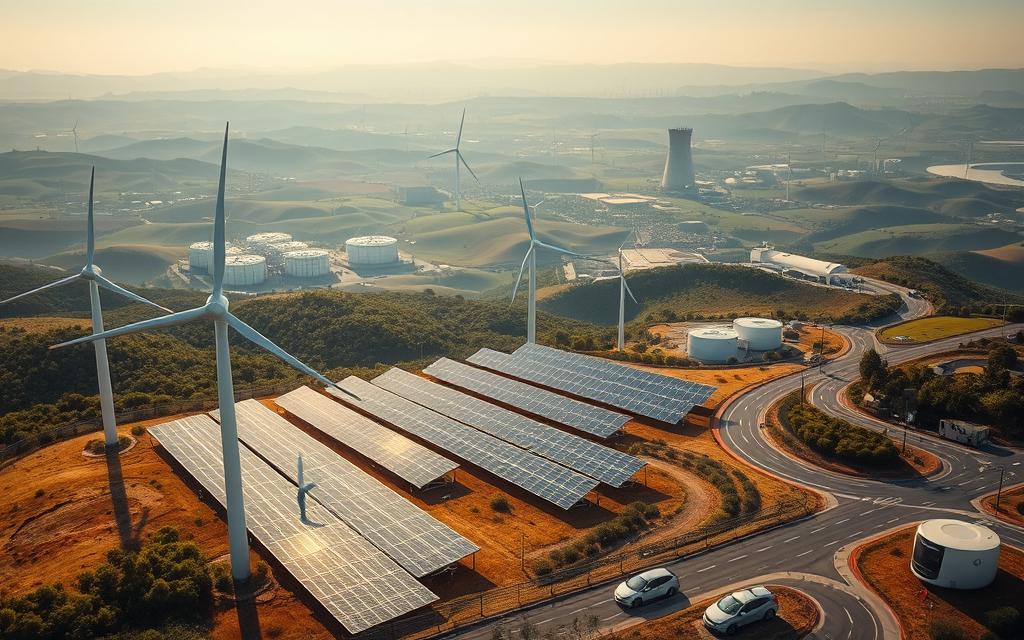
Renewable energy is changing fast, making clean energy more available and affordable. This shift is a big step towards a greener future.
Solar Power Breakthroughs
New solar tech has made solar panels much more efficient. Perovskite solar cells now convert sunlight into electricity at rates over 30%, beating old silicon panels.
Bifacial panels can catch sunlight from both sides, boosting energy output by up to 20%. This means solar power works better in more places.
Wind Energy Developments
Offshore wind turbines are getting bigger, with some now over 15 megawatts. This lets us harness stronger winds in deeper waters.
New blade designs and smart systems improve how much energy we get from wind. Storing energy helps make wind power more reliable.
Carbon Capture and Storage Technologies
Carbon capture tech is key to fighting climate change. Direct air capture pulls CO₂ out of the air, while other methods target industrial emissions.
New methods need less energy, cutting costs by 30-40%. Turning captured carbon into rock for storage is another innovation.
BECCS combines growing biomass with capturing emissions. It’s a way to make renewable energy while reducing emissions.
Smart Grids and Energy Distribution
Smart grids manage energy flow in real-time. They use many renewable sources and keep the grid stable.
Advanced meters give detailed energy use data. This helps set prices and manage energy use better. Faults are fixed quickly, reducing power outages.
Programmes encourage using energy when it’s cheaper. This helps the grid during busy times.
| Technology | Key Innovation | Efficiency Improvement | Current Adoption Rate |
|---|---|---|---|
| Perovskite Solar Cells | Multi-junction architecture | 32% conversion efficiency | Early commercial stage |
| Offshore Wind Turbines | Floating foundation systems | 15+ MW capacity | Rapid expansion |
| Direct Air Capture | Novel sorbent materials | 40% energy reduction | Pilot projects |
| Smart Grid Systems | AI-powered load balancing | 20% distribution efficiency | Widespread implementation |
Revolutionising Healthcare with Future Technologies
The future of medicine is changing fast thanks to digital innovations. These advancements are making healthcare more accessible and precise. They’re also making treatments more personal.
Telemedicine and Remote Healthcare
Telemedicine platforms are a big step forward in making healthcare easier to access. Companies like Teladoc let patients talk to specialists from anywhere. This is great for people in rural areas or those who can’t get to a doctor easily.
Wearable devices like the FreeStyle Libre 3 glucose monitor keep track of health in real-time. Patients can see their health status without needing to go to the hospital all the time. Apps like Headspace help with mental health through digital support.
These remote healthcare options are easing the load on hospitals. They also make it easier for people with ongoing health issues to manage their care. The use of these technologies is changing how we get medical care.
AI-Driven Diagnostics and Treatment
Artificial intelligence is changing how we diagnose diseases with AI healthcare diagnostics. Machine learning can look at medical images and find things humans might miss. This is a big deal for spotting diseases early.
AI is already helping save lives by finding diseases sooner. It helps doctors treat patients faster, which can extend their lives. It also looks at lots of patient data to find health risks.
AI works with doctors to spot tumours and other problems in medical images. It also helps pathologists look at tissue samples quickly. This teamwork makes medical diagnoses more accurate.
Personalised Medicine Through Genomics
Genomic sequencing lets doctors tailor treatments to each patient’s genes. This means treatments are more effective because they’re based on the patient’s unique biology. It’s a move away from treatments that don’t always work for everyone.
Genetic testing can find out if someone is at risk for certain diseases before they show symptoms. This means doctors can take steps to prevent problems before they start. Patients get treatments that are made just for them.
This technology also helps make new medicines faster by finding genetic markers. Pharmaceutical companies can make drugs that target specific groups of patients. This makes treatments safer and more effective.
These new technologies are ushering in a new era of healthcare. They combine telemedicine, AI diagnostics, and genomic medicine for a more individualised approach to care. This is a big change in how we think about healthcare.
Technological Solutions for Food Security
As the world’s population grows, technology is key to ensuring enough food for everyone. It also helps reduce harm to the environment. These new methods are some of the best precision agriculture technology and urban farming ideas. They could change how we grow and get food.
Precision Agriculture Techniques
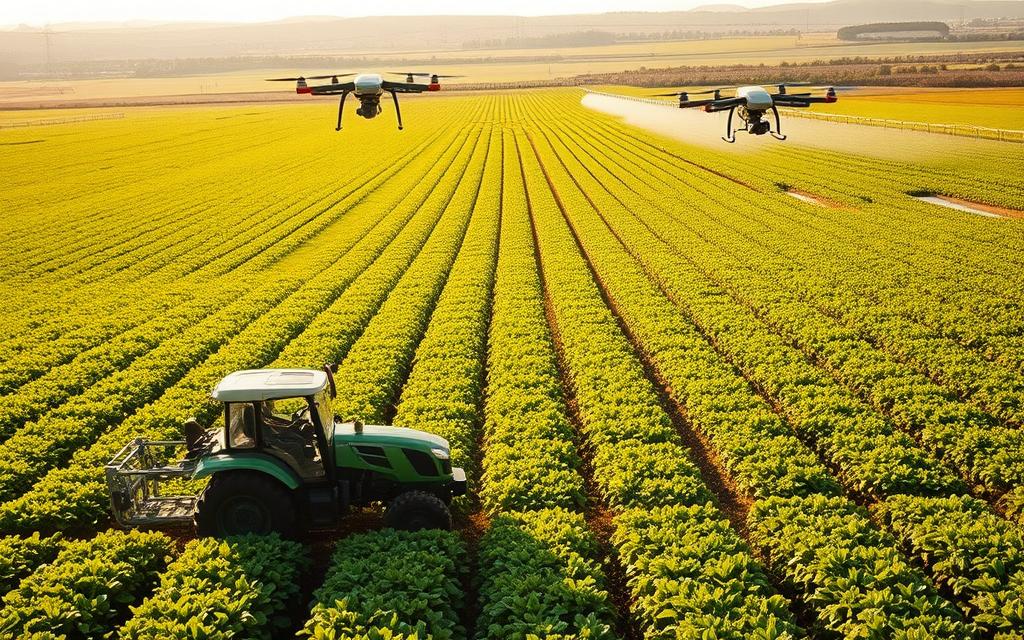
Farming has changed a lot with new technology. Now, farmers use GPS to plant seeds with amazing accuracy. This cuts down on waste and boosts crop yields.
Drones help by taking pictures from above. They spot problems like stressed crops and pests early. Also, smart irrigation systems save water by only watering where it’s needed.
Together, these technologies help farmers use resources better. This leads to more sustainable farming.
Vertical Farming and Urban Agriculture
Big cities are starting to use vertical farming solutions. These systems grow food indoors, using special lights and water systems. They produce crops all year, without harmful chemicals.
This method has many benefits. It cuts down on carbon emissions and brings fresh food to city people. It also turns empty spaces into farms.
“Vertical farming is a very sustainable way to grow food in cities. It combines technology with nature.”
Genetic Engineering for Crop Improvement
Genetic engineering has changed how we grow crops. Scientists can now make plants that can handle tough weather. This is key for crops to survive in changing climates.
Another big step is making crops with more nutrients. This helps fight hunger and malnutrition. These genetic changes help make food systems stronger.
These new technologies show how we can feed the world and protect the planet. They help make farming better for the future.
Water Management and Conservation Technologies
Global water challenges need new tech solutions. These can change how we watch, clean, and save water. New water tech offers ways to fight scarcity and ensure water for all.
Smart Water Monitoring Systems
Today’s smart water systems use IoT sensors. They track water quality and use in real-time. These devices give useful data to improve water distribution and spot problems early.
They keep an eye on things like pH levels, turbidity, and chemical makeup. This helps keep water safe and cuts down on treatment costs by finding contamination early.
Desalination and Purification Advances
New membrane tech has changed desalination. It makes turning seawater into drinking water cheaper and uses less energy. Reverse osmosis systems now get more water with less energy.
There are also new ways to purify water, like graphene filters and UV-LED systems. These make water cleaner and cut down on costs and harm to the environment.
Leak Detection and Prevention Systems
Advanced sensors and AI find leaks in water systems very accurately. They listen for sounds to spot even small leaks early.
These systems work with city networks to send alerts and show where leaks are. This helps fix problems fast and saves a lot of water.
| Technology Type | Key Benefits | Implementation Scale |
|---|---|---|
| Smart Monitoring | Real-time data collection | Municipal to household |
| Advanced Desalination | Energy efficiency | Regional to industrial |
| Leak Detection | Water conservation | Infrastructure-wide |
These water management technologies are key to solving global water issues. They help meet sustainable goals and tackle big environmental problems.
Education Accessibility Through Digital Innovation
Digital education technology is changing how we learn, breaking down old barriers. It opens doors for students everywhere, no matter where they are or what they can afford.
This shift in education is huge. Now, quality learning is available to all, from remote areas to cities. Digital platforms make sure education reaches those who need it most.
Online Learning Platforms and MOOCs
MOOCs and digital learning platforms have changed how we get education. Sites like Coursera, edX, and Khan Academy offer top courses online. Anyone with internet can learn from them.
Microsoft’s digital classrooms show how tech can improve education. They give schools in poor areas digital tools, making learning fairer.
In India, Atal Tinkering Labs bring hands-on learning to kids. They use tech to teach innovation and thinking skills early on.
Adaptive Learning Technologies
Adaptive learning systems are at the forefront of personalising education. They use AI to adjust learning to fit each student’s needs.
These systems are great because they spot learning gaps early. Students get learning paths that help them, not hold them back.
Code.org uses these ideas in their coding classes. Their platform changes challenges based on how well students do. This makes learning fun and accessible for everyone.
Virtual and Augmented Reality in Education
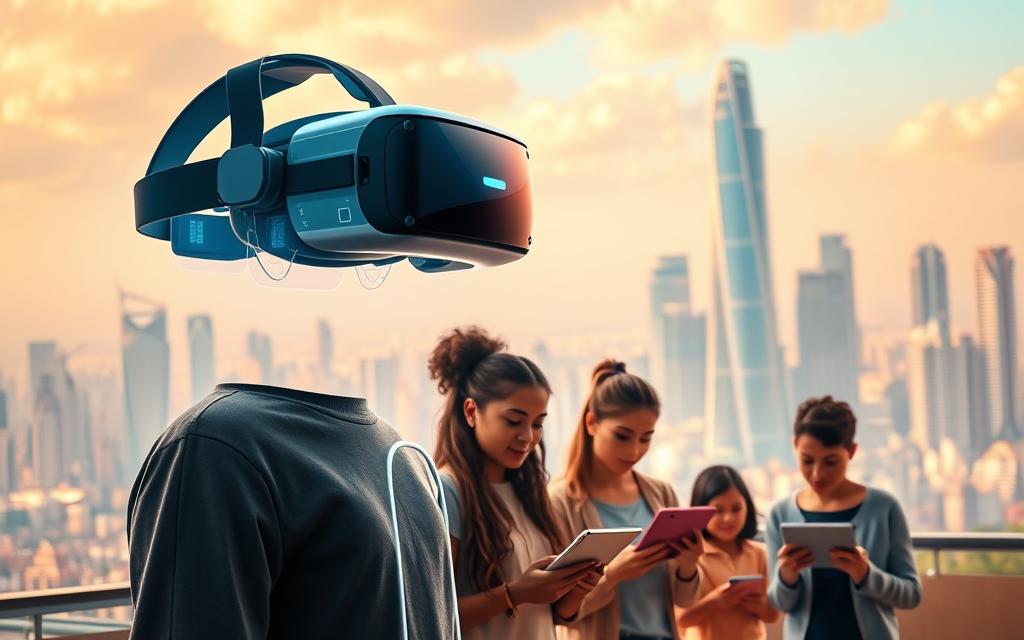
Immersive tech is making learning exciting. Virtual and augmented reality let students explore and learn in new ways.
These tools are great for students who can’t get to certain places. They can go on virtual field trips to museums and cultural sites.
Medical students use VR to practice without risk. This helps them get better at complex tasks before they work with real patients.
These technologies are the future of education. As they get better, they’ll help make learning fairer for everyone around the world.
Smart Cities and Sustainable Urban Development
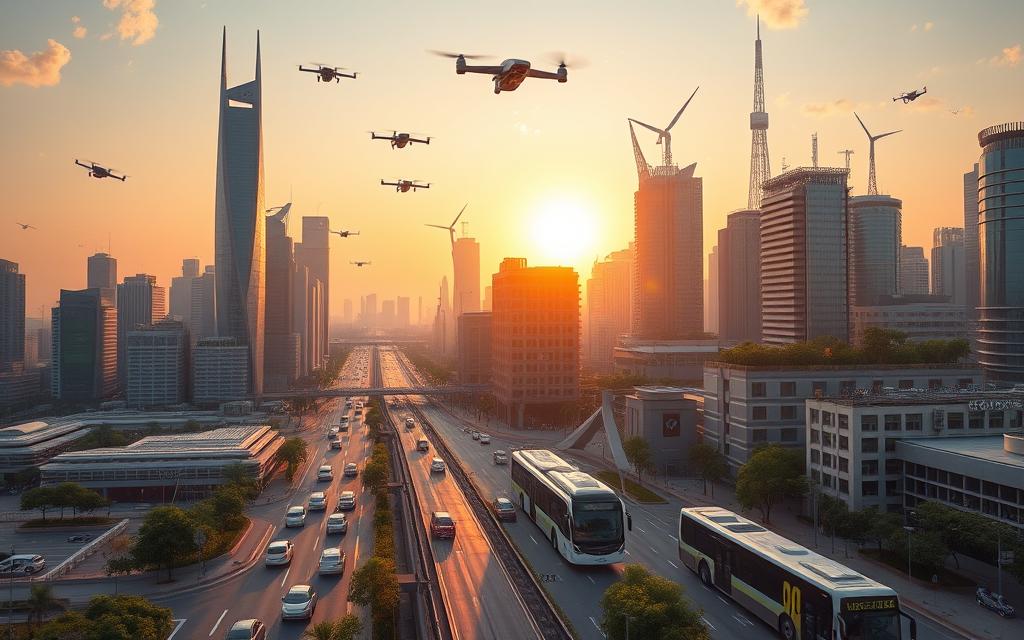
Urban areas worldwide face big challenges as more people live there and resources get tight. Technology brings new solutions with systems that make cities better, greener, and more efficient. Some tech categories also becomes relevant when this topic is compared with nearby questions around can help future. Smart city tech is changing how we live in cities, using data and green practices for a better future.
Intelligent Transportation Systems
Today’s cities deal with traffic jams, pollution, and poor transport systems. Smart transport uses AI and real-time data to change how we move around. It looks at traffic, adjusts signals, and gives directions to cut down on jams and travel times.
Key innovations include:
- AI-powered traffic management centres that respond to changing conditions
- Integrated public transit systems with real-time tracking and payment
- Smart parking solutions that guide drivers to available spaces
- Connected vehicle technologies that communicate with infrastructure
Projects like the Naryn Urban Resilience Project show how good transport planning can make cities better and greener.
Energy-Efficient Building Technologies
The buildings in cities use a lot of energy. New building tech is key to making cities greener. It aims to use less energy while keeping buildings comfy and functional.
Modern smart buildings have:
- Advanced HVAC systems that adapt to occupancy and weather conditions
- Automated lighting controls with motion sensors and daylight harvesting
- Smart metres that provide real-time energy usage data
- High-performance building materials with superior insulation properties
The CompTIA Smart Cities Advisory Council says building tech is vital for green cities. It helps meet human needs while protecting the environment.
Waste Management Innovations
Handling waste in cities is tough and bad for the environment. New tech is changing how we collect, sort, and recycle waste. These systems aim to be efficient and kind to the planet.
Cutting-edge solutions include:
- Sensor-equipped bins that signal when they need emptying
- Route optimisation software for collection vehicles
- Advanced sorting technologies that improve recycling rates
- Waste-to-energy systems that convert rubbish into power
These new ways of managing waste cut costs and help cities be greener. Cities using these techs see more recycling and less waste in landfills.
Putting these systems together makes cities smarter and more sustainable. As tech keeps improving, we can make cities better, greener, and more livable.
Addressing Economic Disparities with Technology
Technology is a powerful tool for reducing economic gaps worldwide. It brings financial services, jobs, and clear economic systems to those who couldn’t access them before. This is a big help in areas where old infrastructure has kept people poor.

Digital Financial Inclusion
Mobile banking and digital payments open up financial services for those without bank accounts. In India’s countryside, Common Service Centres offer key digital services. They help people join the financial world.
- Mobile banking apps for remote transactions
- Microfinance platforms for entrepreneurs
- Digital literacy to help people financially
This financial inclusion technology changes how people can participate in the economy. It cuts down costs and boosts security for those at risk.
Remote Work and Economic Opportunities
Digital connections create jobs that don’t need you to be in one place. Fast internet and tools for working together let people in rural areas work globally. This:
- Lessens the need to move to cities
- Spreads economic benefits more evenly
- Brings in different ways for communities to earn money
Remote work is a big plus for areas where jobs are scarce. It lets skilled workers find jobs worldwide, creating lasting economic opportunities without needing to be in one place.
Blockchain for Transparent Systems
Blockchain makes economic systems fair and trustworthy, even in places prone to corruption. It offers:
- Safe land records to stop fraud
- Clear supply chains for fair pay
- Secure voting systems for fair decision-making
These blockchain economic solutions help make sure everyone is treated fairly. They cut out middlemen and make transactions more efficient, reducing corruption.
| Technology Type | Primary Benefit | Key Implementation | Impact Level |
|---|---|---|---|
| Mobile Banking Platforms | Financial Access | Common Service Centres | Community Transformation |
| Remote Work Tools | Employment Access | Digital Connectivity Hubs | Regional Development |
| Blockchain Systems | Transparent Transactions | Secure Land Registries | Systemic Change |
| Digital Payment Networks | Reduced Transaction Costs | Microfinance Platforms | Individual Empowerment |
These technologies show how digital financial inclusion and blockchain economic solutions can tackle economic gaps. They create lasting economic systems that help those who have been left behind. This brings more access, transparency, and chances for success.
Conclusion
Technology has a huge role in solving our biggest problems. It helps with climate change and health issues. It gives us tools to make the world better and fairer.
The real impact of technology comes from how we use it. We must choose wisely, balancing new tech with ethics and fairness. This is key to making progress.
Good leaders are vital in this era. They need to know about tech and global issues. This knowledge helps them make decisions that benefit everyone.
We all have a duty to guide tech progress. It’s not just about the tech itself but how we use it. With the right approach, it can improve food, education, jobs, and the environment.
We must think carefully about technology’s role in our lives. By making smart choices, we can make sure tech helps everyone. This way, we can build a better future for all.