

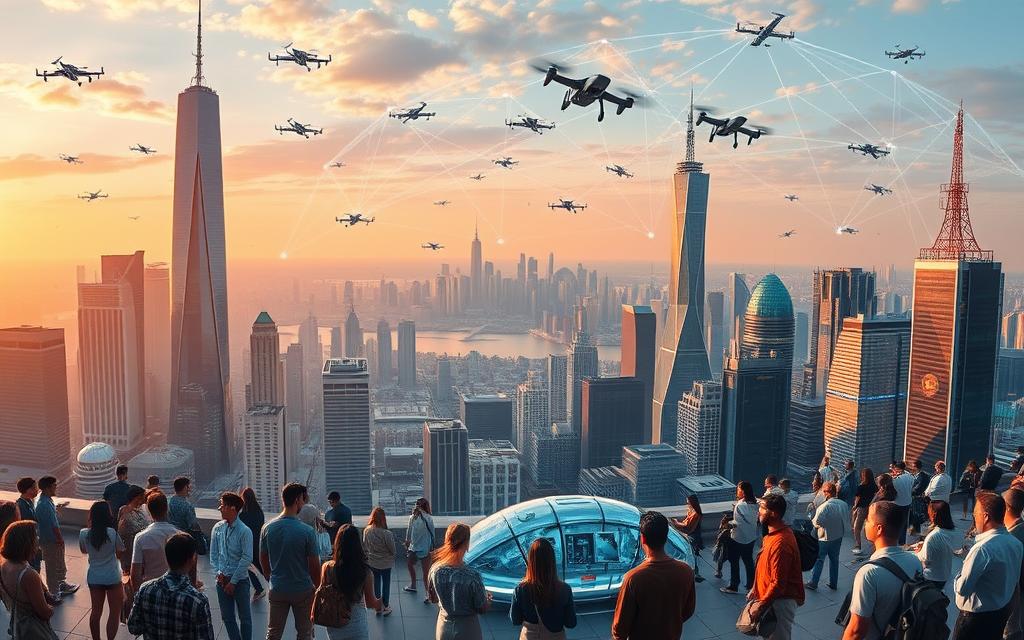
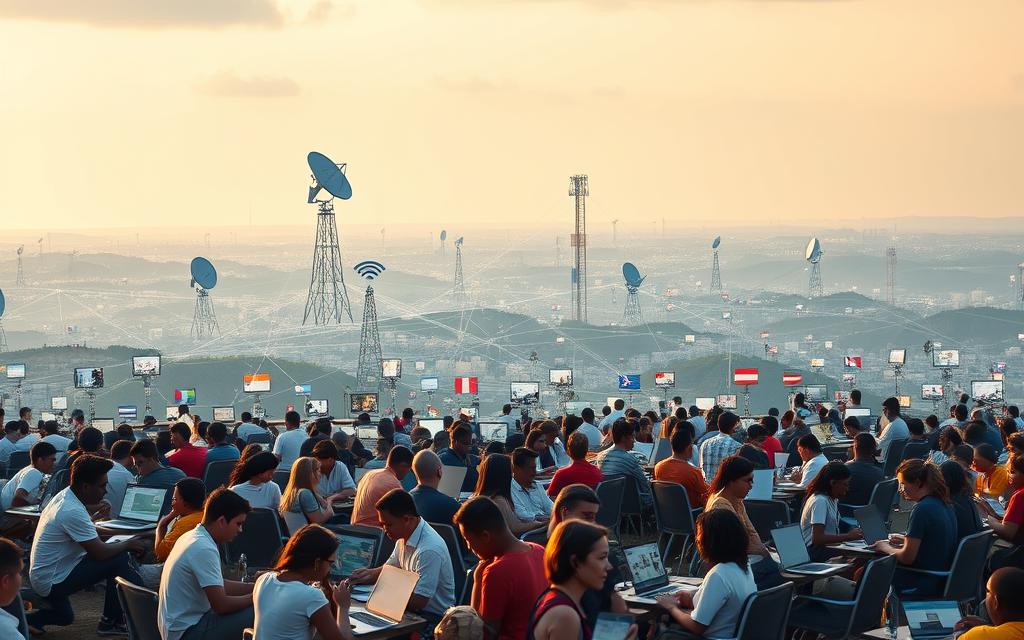
Today, technology and globalisation are the driving forces behind our interconnected world. They have opened up new opportunities and broken down old barriers. This is something our ancestors could only dream of.
The digital age connectivity has changed everything. Now, we can talk, work, and share cultures instantly. Thanks to messaging apps, video calls, and social networks, distance no longer matters.
This connection brings many benefits to the world. Economies grow as markets expand globally. Cultural exchanges also increase, helping us understand each other better.
The global technological impact is huge. It’s changing how we live and interact with each other. Digital tools help us work together in ways we never could before.
The Symbiotic Relationship Between Technology and Globalisation
Technology and globalisation are closely linked, changing our world. This bond has grown over centuries, making our world more connected. Today’s digital age globalisation is the result of many technological breakthroughs.
Every new technology has made it easier for economies, cultures, and people to connect worldwide. This shows how innovation keeps making our world more connected.
Defining Globalisation in the Digital Age
Today, globalisation means connecting the world through digital means. It’s not just about trade and investment anymore. It’s about fast communication, cultural sharing, and knowledge exchange.
The digital age has changed how we do business, form communities, and find information. It has made our world more connected than ever before.
Related Posts:
- Is Technology Making Life Better or Worse The Great Debate

- The Disadvantages of Technology in the Workplace…

- How Technology Impacts Teaching and Learning Modern…

- How Technology Can Help Us in the Future Solving…

- What Are Some Types of Technology A Guide to Tech Categories
- What Does SMA Mean in Technology Connectors and Antennas

- Instantaneous global communication networks
- Borderless digital marketplaces
- Real-time cultural exchange platforms
- Global collaborative work environments
Historical Context: From Industrial Revolution to Digital Revolution
The Industrial Revolution started our journey to global connection. Innovations like steam engines, railways, and telegraphs were the first steps. They made travel and information sharing faster.
The shift from industrial to digital revolution was a major milestone. Computing and the internet made global connection much faster. Each step built on the last, making our world more connected.
| Era | Key Innovations | Global Impact | Connectivity Speed |
|---|---|---|---|
| Industrial Revolution (1760-1840) | Steam engine, telegraph, railways | Reduced physical distance barriers | Weeks to months |
| Technological Revolution (1870-1920) | Telephone, electricity, automobiles | Faster communication and transport | Days to weeks |
| Digital Revolution (1980-present) | Internet, mobile technology, computing | Instant global connectivity | Real-time |
The telegraph showed how technology could connect distant places. It was the start of fast communication. The internet has taken this further, making our world even more connected.
These technological steps have made our world more connected. From the industrial to the digital revolution, each step has helped us connect more easily.
How Has Technology Contributed to Globalisation
The digital revolution has changed how countries talk and do business together. It’s all thanks to technology that makes global connections easy.
The Internet: Digital Infrastructure for a Connected World
The internet is at the core of internet globalisation. It’s like a big network that connects everything worldwide. It helps with finance, communication, and more.
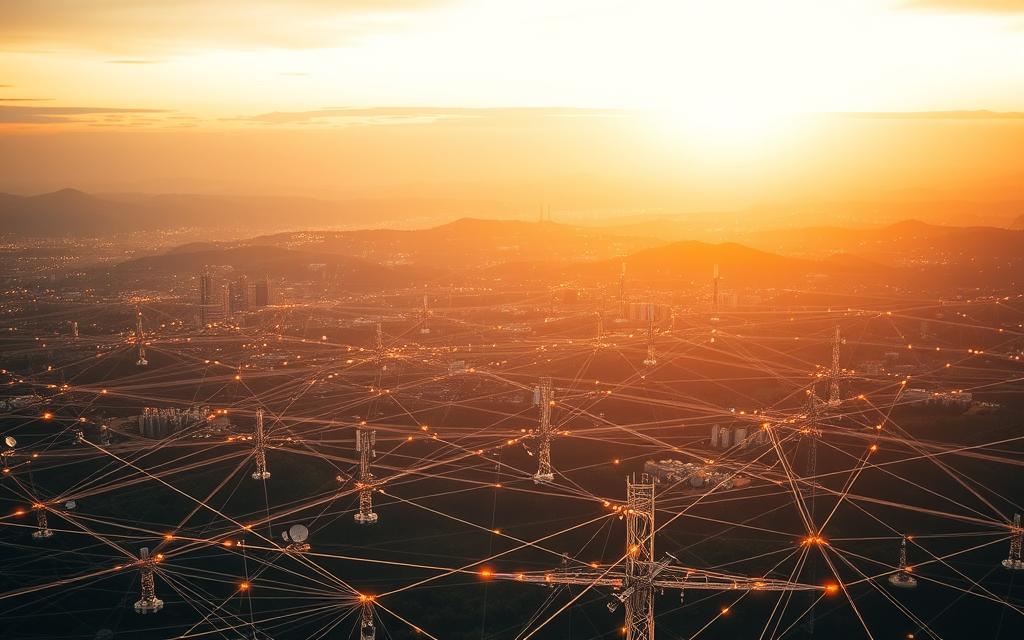
Tim Berners-Lee’s invention changed how we get information. The web lets anyone share ideas with the world.
Now, we can all access education, science, and culture online. This has helped countries in need join global talks.
Broadband and Mobile Connectivity: Closing Geographical Gaps
Broadband connectivity has changed business worldwide. It lets companies work together instantly, no matter where they are.
In places like Sub-Saharan Africa, mobile phones have changed everything. They’ve skipped over old ways of doing things.
“Mobile technology has become the primary gateway to the digital world for millions in developing nations.”
Now, even small villages can reach out to the world. They can find jobs, learn new things, and get health info. Old barriers are falling down fast.
With 5G and satellite internet, we’re on the verge of a new era. Soon, even the most far-off places will be part of the global digital scene.
Communication Technologies: Shrinking the Global Village
Email and video calls have changed how we talk to each other worldwide. They’ve made the world feel smaller, like a village. These tools help businesses, families, and cultures share ideas easily.
Email and Instant Messaging: Real-Time Global Correspondence
Email was the first to let us send messages quickly across the globe. It’s much faster than old-fashioned mail. This change has made business and personal talks much quicker.
Now, with WhatsApp, Slack, and Microsoft Teams, we can talk in real-time. These tools let us:
- Chat instantly with people all over the world
- Share files and work on documents together
- Have group chats with teams in different countries
- Talk in many languages
Businesses can offer 24/7 customer support thanks to these tools. Projects get done faster, with decisions made quickly.
Video Conferencing: Face-to-Face Across Continents
Video calls have made it easier to meet without flying. Zoom, Skype, and Microsoft Teams let us see each other face-to-face from anywhere. This saves money and helps the planet while keeping us connected.
Video calls have also changed education and healthcare. Schools offer virtual programmes, and doctors can consult patients remotely. These tools open up new ways to:
- Work from anywhere in the world
- Host global events and conferences
- Have family gatherings and celebrations
- Train employees across countries
During the pandemic, video calls kept businesses running. Companies that used these tools quickly moved to remote work. It showed that many meetings can work well online.
These technologies keep getting better, with more features and easier access. They’re key to our connected world today.
Transportation and Logistics Technologies
Physical systems are key to global trade. They’ve cut down the time and cost of moving goods and people. Shipping and air travel have changed international trade a lot.
Containerisation and Shipping Innovations
Containerisation changed global trade by making cargo transport standard. Loading and unloading ships used to take a lot of time and effort. The container system made these tasks much easier.
Today, shipping uses advanced tracking and automated ports. Internet of Things devices keep an eye on containers during their journey. Artificial intelligence helps plan routes for better fuel use and weather conditions.
These changes have lowered shipping costs and times. Now, even small businesses can trade internationally. Global supply chains work better than ever before.
Air Travel Technology: Connecting People Physically
Air travel technology has made the world smaller. Modern planes can fly across continents in hours. This has changed how we do business and connect with others.
New engines and navigation systems have made flying cheaper and easier. Cargo planes also speed up the delivery of urgent goods worldwide.
Booking flights online makes travel smooth. People can plan complex trips easily. This physical connection works well with digital communication.
Shipping and air travel have built a strong network for global commerce. This network is vital for moving goods and people around the world.
Digital Economy and E-Commerce Platforms
E-commerce platforms and financial technologies are key drivers in the digital economy’s new era. They make international trade easy for businesses of all sizes. This lets them enter global markets with less hassle.
Global Payment Systems and Financial Technology
Financial technology has changed how we do cross-border transactions. Modern global payment systems remove old banking hurdles. They let us send money instantly across countries and currencies.
Services like PayPal make international payments easy for everyone. They handle currency changes and legal stuff automatically.
Blockchain and cryptocurrencies are the next big thing in finance. They offer new ways to do banking, cutting costs and bringing more people into the financial world.
E-Commerce Marketplaces: Borderless Retail
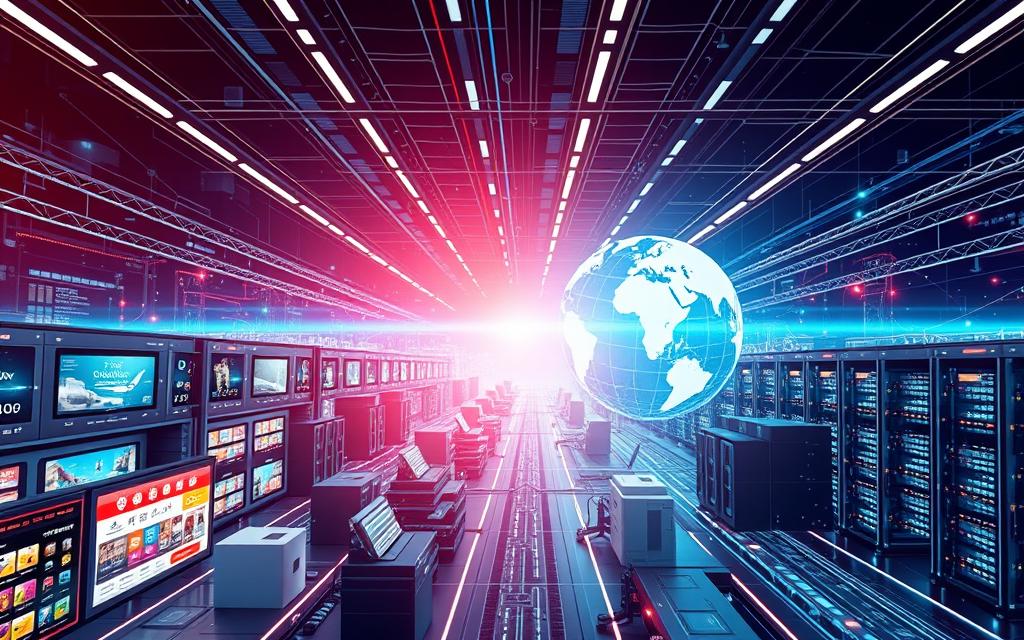
Online marketplaces have changed retail by removing location limits. Big names like Amazon and Alibaba let sellers from anywhere reach global customers.
These platforms offer tools that small businesses can’t afford on their own. They handle things like shipping, payments, and customer service worldwide.
Platforms like Shopify make it easy for entrepreneurs to sell globally. This has helped small businesses start international from the start.
The digital economy keeps growing as these technologies come together. Payment systems work smoothly with e-commerce platforms. This makes shopping and doing business globally easier for everyone.
Cultural Exchange Through Digital Media
Digital platforms have changed how cultures meet and influence each other. This new connection has made a lively space where traditions and ideas move freely. It’s a place where nations and communities share and learn from each other.
The digital world is like a modern marketplace. Here, different voices come together. This helps us understand each other better but also makes us think about keeping our cultures alive in a connected world.
Social Media: Global Conversations and Communities
Facebook, TikTok, and Instagram have become places for talking across cultures. They let us share our views, traditions, and lives instantly, no matter where we are.
Some key ways social media affects us include:
- Sharing cultural practices and celebrations right away
- Creating global interest groups
- Spreading trends and movements fast
- Connecting different cultural groups directly
TikTok’s viral challenges mix cultures, while Instagram’s photos and videos let us see festivals and foods from everywhere. This helps us understand and connect with other cultures better.
Streaming Services: Cultural Content Without Borders
Streaming services have made it easy to watch content from all over. Netflix, Disney+, and Amazon Prime have become global cultural leaders. They bring stories and shows to people everywhere.
These platforms show how they help cultures meet through:
- Local shows becoming hits worldwide
- Dubbed and subtitled shows reaching more people
- Collaborations between countries’ creative teams
- Keeping and sharing traditional media online
Korean dramas are loved in the West, and Latin American shows are popular in Asia. This shows how stories can travel and enrich our views of the world.
As a media expert notes:
“Streaming services are like digital cultural ambassadors. They let countries share their stories with the world, bypassing old barriers.”
This new way of sharing culture is both good and bad. It helps us appreciate and learn from each other but also worries about losing local cultures in a sea of global content.
Finding the right balance between sharing culture and keeping it true is key in our digital world.
Education and Knowledge Sharing Technologies
Technology has changed how we share knowledge worldwide. Digital learning platforms have broken down old barriers. Now, everyone can access quality education and research materials.
Massive Open Online Courses (MOOCs)
MOOCs have changed education by making university-level courses available to all. Sites like Coursera and edX work with top schools to offer courses globally. These courses come with certifications that are valued in the job market.
MOOCs make learning flexible and accessible. People in developing countries can learn new skills without moving. Students in far-off places can learn from top professors they couldn’t reach before.
| Platform | Courses Offered | Global Reach | Certification Options |
|---|---|---|---|
| Coursera | 4,000+ | 190+ countries | Professional certificates |
| edX | 3,000+ | Worldwide | MicroMasters programmes |
| FutureLearn | 1,000+ | International | Academic credits |
Digital Libraries and Research Collaboration Tools
Digital libraries have changed how we do research. They give us instant access to vast amounts of knowledge. Google Books and Project Gutenberg have digitised millions of texts, making them easy to find and read.
Tools for working together across the globe have also improved. Cloud-based platforms let teams share and work on documents in real time. This speeds up research and helps teams from different cultures work together.
These tools do more than help researchers. They also make cultural heritage available to everyone. They help institutions with limited resources get access to information.
Challenges and Digital Divides in Technological Globalisation
Technology has made the world more connected, but not equally. The systems that link us also bring risks and widen gaps. We must focus on these issues.

Privacy and Security Concerns in a Connected World
Our digital world brings big privacy and security risks. Data moves freely, but so does the chance of it being stolen. Big data breaches show how privacy concerns affect us all.
Cyber threats have grown more complex. They can hit services in many countries at once. These threats include:
- Cross-border data exploitation
- International cyber espionage
- Global ransomware networks
- Identity theft on an international scale
Keeping up with these threats is hard. Laws are slow to adapt, leaving room for criminals. We need global action, not just national efforts.
Technological Access Disparities Between Nations
The digital age has widened the gap between rich and poor countries. This gap affects jobs, education, and healthcare. It’s a big problem.
Several things make this gap worse:
- Bad infrastructure in some areas
- Costs of devices and internet
- Lack of digital skills
- Language and content issues
These technological access disparities make it hard for some areas to catch up. Without help, these gaps will only grow, hurting social and economic equality worldwide.
We need everyone to work together. Governments, companies, and global groups must join forces. Only then can we make the digital world fair for everyone.
Future Technologies Shaping Globalisation’s Next Phase
Global connectivity is evolving fast, thanks to new technologies. These innovations will change how countries and businesses work together. They aim to make global systems more efficient, open, and connected.

Artificial Intelligence and Machine Learning in Global Systems
Artificial intelligence and machine learning are changing global operations. They use predictive analytics and automated decisions. This makes supply chains smarter by predicting demand and optimising routes.
AI also helps in finance by spotting fraud and assessing risks. It looks at huge amounts of data to find patterns that humans might miss. This makes international markets more stable.
AI-powered translation services improve cross-border communication. They instantly translate languages, making international business and cultural exchanges easier.
Blockchain and Decentralised Global Networks
Blockchain brings new levels of transparency and security to global transactions. It works without a central point, making systems more reliable.
Supply chains use blockchain to track goods securely. This gives consumers accurate info on products and helps businesses cut fraud and manage stock better.
Blockchain-based DeFi platforms challenge traditional banks. They offer financial services without borders, cutting costs and reaching more people.
The metaverse is another area where blockchain helps. It creates virtual spaces for global teams to work together. This could reduce the need for travel while keeping interactions rich and engaging.
These advances in future technologies globalisation show how technology connects the world in every field. The mix of AI, machine learning, and blockchain could speed up global integration even more.
Conclusion
This summary shows how digital changes have made the world closer. The internet and AI have made it easier to talk, trade, and share cultures. They’ve made the world feel smaller and opened up more chances.
We’ve seen big steps forward and some challenges too. Things like digital gaps and security worries need fixing. We must work on making sure everyone has access and that technology is used fairly.
The future of connecting the world depends on smart innovation. New tech like blockchain and AI will help us link even more closely. Working together globally will help us grow in new ways.
Technology and globalisation are closely linked. As they keep changing, they offer great chances for everyone to do well together. This could lead to a world where we all understand and support each other more.
FAQ
How has technology fundamentally driven globalisation?
Technology has been key in making the world more connected. It has changed how we communicate, travel, and do business. The internet, mobile phones, and digital platforms have broken down barriers.
Now, we can talk to each other in real time, move goods quickly, and work together across borders. This has led to economic growth, cultural exchange, and global teamwork on a huge scale.
What is the relationship between technological advancements and global integration?
Tech and global integration go hand in hand. Every new technology has made the world more connected. From the telegraph to the internet, each step forward has brought us closer together.
This connected world drives the need for more innovation. It creates a cycle that keeps improving how we interact globally.
How has the internet contributed to making the world more interconnected?
The internet is the heart of modern globalisation. It gives us instant access to information and lets us communicate easily worldwide. With the World Wide Web, broadband, and mobile networks, distances have shrunk.
It has empowered businesses to go global and let people share ideas and work together, no matter where they are.
In what ways have communication technologies like email and video conferencing impacted global interactions?
Email, instant messaging, and video calls have changed how we interact globally. Tools like Skype and Zoom make talking to people across the world easy and cheap. They help with business, education, personal connections, and teamwork.
This makes the world feel smaller and more reachable.
How do transportation and logistics technologies support global trade?
New tech in transport and logistics has made global trade faster and cheaper. Containerisation, automated shipping, and air travel tech have improved things a lot. IoT and AI help track goods and manage supply chains better.
This makes moving goods and people around the world smoother.
What role does e-commerce play in eliminating geographical barriers to trade?
E-commerce has opened up the world for businesses of all sizes. It lets them sell to people everywhere without needing a physical store. Platforms like Shopify help small businesses go global.
Secure payment systems and new tech like cryptocurrency make digital trade possible without borders.
How does digital media foster cultural exchange on a global scale?
Digital media, like social networks and streaming services, shares culture worldwide. Platforms like Instagram and Netflix spread ideas and trends far and wide. This helps people understand different cultures and start global conversations.
But it also raises questions about losing cultural diversity in a world of sameness.
What impact has technology had on global education and knowledge sharing?
Tech has changed education by making knowledge available to everyone. MOOCs, digital libraries, and research tools have opened up learning. They support lifelong education and help bridge educational gaps.
This helps people learn and grow, no matter where they are.
What are some key challenges associated with technological globalisation?
Big challenges include privacy and security risks, like data breaches. There’s also a big gap in tech access between rich and poor countries. This gap can make inequality worse and leave some people behind.
We need fair policies and better infrastructure to make sure everyone benefits from tech.
How might future technologies like AI and blockchain shape globalisation?
New tech like AI, blockchain, and quantum computing will change globalisation. They will make supply chains smarter, financial systems more open, and help us work together better. Some tech categories also becomes relevant when this topic is compared with nearby questions around contributed globalization connecting. These innovations will make global systems more efficient and connected.
Why is inclusive technological adoption important for future global growth?
Making sure everyone can use technology is key for global growth. It ensures everyone gets a chance to benefit from globalisation. By tackling digital divides and creating fair policies, we can avoid inequality and work together for a better future.