


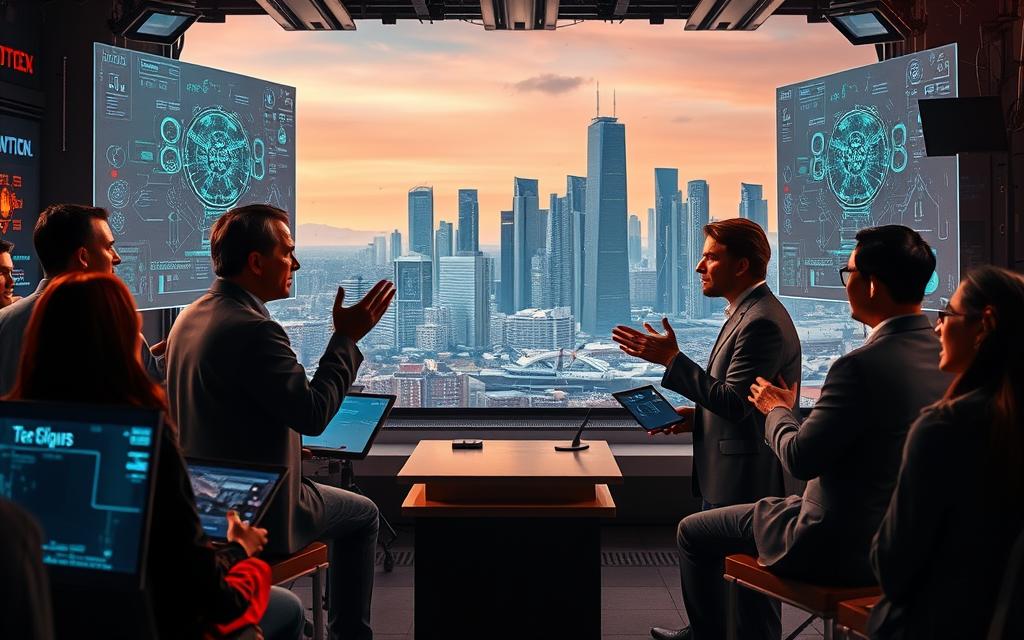
Today, we stand at a critical juncture in the technology debate. This issue affects our personal lives and our shared experiences.
We enjoy better connectivity and more information than ever before. Yet, we face privacy issues and feel overwhelmed by digital content.
The digital revolution has changed how we work, talk, and live our daily lives. Its effects on society are being closely watched by experts and leaders.
Universities hold debates on this topic, showing there’s no clear agreement. These debates show how different views shape our view of progress.
This article looks at both sides of the global conversation. We explore how technology changes our world. We aim to give you balanced views to help you decide for yourself.
The Digital Revolution: A Historical Perspective
Human progress has always brought big changes. These changes have reshaped societies and our daily lives. The move from steam power to digital devices is one of the biggest shifts.
This change from mechanical to digital has changed how we work, talk, and see the world.
From Industrial to Information Age
The Industrial Age started in the late 1700s. It brought mass production, factories, and steam power. People moved from farms to cities focused on making things.
Related Posts:
- How Technology Contributed to Globalization…

- The Disadvantages of Technology in the Workplace…
- How Technology Impacts Teaching and Learning Modern…

- What Are Some Types of Technology A Guide to Tech Categories
- How Technology Can Help Us in the Future Solving…

- What Came First Science or Technology A Historical…

In the mid-1900s, a new era began. Computers became common, and networks connected people far apart. This marked a big change in how we create and share value.
Key Technological Milestones
Several breakthroughs sped up our digital change. The microprocessor of 1971 made computers smaller and more powerful.
The World Wide Web of 1989 made information easy to access worldwide. Mobile tech made computers small enough to carry in our pockets. AI is now pushing innovation even faster.
These milestones have made our world interconnected.
The Acceleration of Digital Transformation
Digital adoption has grown fast in recent years. What used to take generations now happens in years.
This fast pace brings both chances and challenges. Knowing our history helps us understand today’s tech debates.
| Period | Primary Technology | Social Impact | Key Innovation |
|---|---|---|---|
| 1760-1840 | Steam Power | Urbanisation | Steam Engine |
| 1870-1914 | Electrical Power | Mass Production | Assembly Line |
| 1970-Present | Digital Computing | Global Connectivity | Internet |
| 2010-Present | Mobile & AI | Always-On Culture | Smartphone |
This shows how each era built on past innovations and introduced new ones.
Is Technology Making Life Better or Worse: The Core Question
The debate on technology’s impact is complex. We must first define what makes life better or worse in today’s digital world. Technology affects us in many ways, making it hard to give a simple answer.

Defining “Better” and “Worse” in Modern Context
In our digital age, “better” means being more efficient, connected, and informed. Many see technology as progress when it saves time and opens new learning opportunities. It brings us faster communication, instant knowledge, and automated tasks.
“Worse” often means losing privacy, facing more surveillance, and health risks. The digital world raises concerns about data safety, mental health, and social isolation. Experts say the constant connection and info overload stress us in ways past generations didn’t face.
Whether technology is an improvement or not depends on what we value most. Some focus on work efficiency and convenience, while others care more about mental health and relationships. This difference makes the better or worse technology debate hard to settle.
The Subjectivity of Technological Impact
Technology’s effects change a lot based on who you are, where you live, and what you believe. A tech worker in Silicon Valley might see AI as a breakthrough, but a factory worker might see it as a threat. This shows that technology’s good and bad sides aren’t shared equally.
Our personal experiences with tech also show its subjective nature. For some, social media is a lifeline for connections and career growth. For others, it’s a source of stress and distraction. The same tech can have very different effects on people.
| Perspective | Technology as “Better” | Technology as “Worse” |
|---|---|---|
| Professional | Increased productivity and remote work options | Job displacement through automation |
| Social | Global connectivity and community building | Reduced face-to-face interaction quality |
| Health | Advanced medical treatments and monitoring | Increased screen time and sedentary lifestyles |
| Educational | Access to global knowledge resources | Information overload and distraction |
The table shows how different people can see the same tech in different ways. It highlights the subjective nature of technology’s impact. There’s no one-size-fits-all answer to whether tech improves or worsens life.
The question of technology’s overall effect is complex. It depends on our choices, not just on tech itself. How we use and manage technology determines its impact on our lives. This perspective shifts the focus from technology to our responsibility in shaping its development and use.
Enhanced Connectivity and Communication
The digital era has changed how we connect across the world. New technologies have made it possible to talk to anyone, anywhere, instantly. This change affects our personal lives, work, and how we interact globally.
Global Communication Networks
Today, we can communicate easily thanks to the internet and mobile networks. Countries like Nigeria have seen big changes, thanks to smartphones. These tools help us connect without worrying about distance or time zones.
Businesses can now work with people all over the world without much trouble. International teams work together smoothly through digital tools. The world is more connected than ever.
Social Media’s Dual Nature
Social media lets us connect and build communities in new ways. It helps us stay in touch with friends and family, no matter where they are. But, it also has its downsides.
False information can spread fast on social media. Being always connected can make us feel tired and anxious. We need to understand both the good and bad sides of these platforms.
Remote Work and Digital Collaboration
Remote work is a big change brought by technology. Tools like Zoom and Microsoft Teams help teams work together from anywhere. This change is reshaping how we work.
These tools make it easy to share documents and have video calls. People can work from anywhere with an internet connection. The future of work is likely to include more remote options.
| Platform | Primary Use | User Base | Key Features |
|---|---|---|---|
| Zoom | Video Conferencing | 300+ million | HD video, screen sharing |
| Slack | Team Messaging | 12+ million | Channels, integrations |
| Microsoft Teams | Collaboration Suite | 270+ million | Chat, meetings, file storage |
| Google Workspace | Productivity Tools | 2+ billion | Docs, Sheets, Drive |
Digital tools keep changing how we work and communicate. Companies need to keep up with these changes. Finding a balance between staying connected and taking care of ourselves is key.
Healthcare Advancements Through Technology
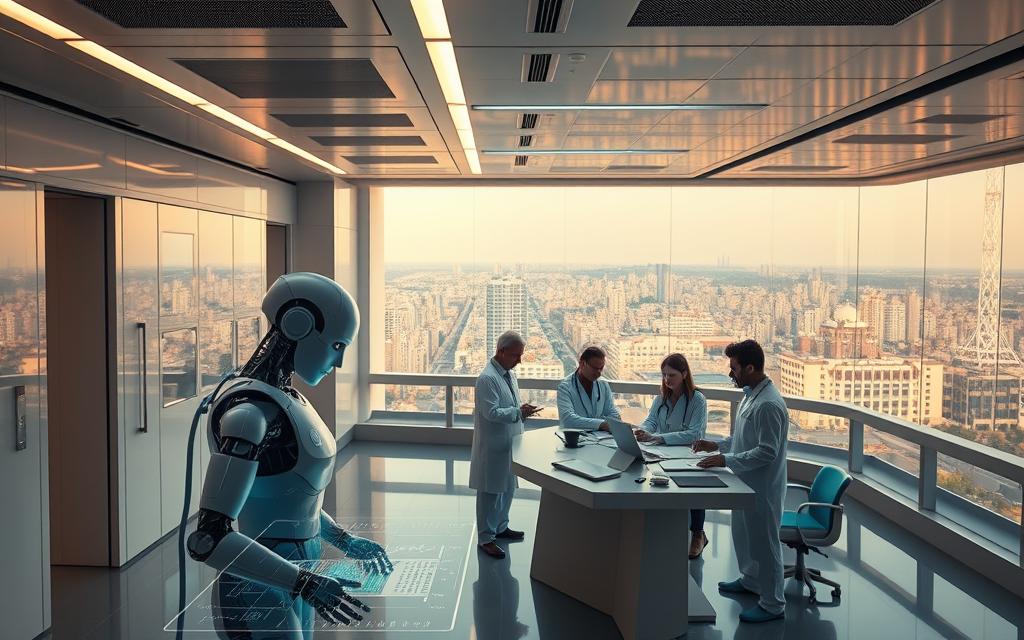
Technology has changed healthcare a lot. It brings new ways to diagnose and treat diseases. This includes things like artificial intelligence and remote monitoring.
Medical Diagnostics and Treatment
Artificial intelligence is changing how we diagnose diseases. AI can look at medical images very closely. It finds things that humans might miss.
AI is great at finding cancer early. This means patients can get better treatment sooner. AI gets better at spotting cancer as it sees more images.
“The integration of AI in medical diagnostics represents not replacement but augmentation of human expertise, creating collaborative intelligence that enhances clinical decision-making.”
AI also helps with genetic analysis and finding new medicines. It helps doctors make treatment plans that fit each patient’s needs.
Telemedicine and Accessibility
Telemedicine has made healthcare more accessible. It lets doctors see patients from anywhere. This is great for people in remote areas.
More people are using telemedicine now. It lets them talk to doctors through video calls and messages. This is safe and easy to use.
Telemedicine has many benefits:
- It saves patients time and money by not having to travel.
- It lets patients see specialists even if they’re far away.
- It helps keep care going by letting doctors check in regularly.
- It helps manage long-term health conditions better.
But, there are challenges like cost and learning how to use it. Yet, the benefits of making healthcare more equal are big.
Wearable Health Monitoring Devices
Wearable tech has grown a lot. It’s not just for tracking fitness anymore. It can monitor health closely and even predict problems.
These devices range from smartwatches to special sensors. Some even track brain activity. This is new and exciting for managing conditions like epilepsy.
Wearable devices give doctors a constant update on a patient’s health. This helps them act faster and tailor treatments better.
| Device Type | Primary Function | Key Benefits | Considerations |
|---|---|---|---|
| Smartwatch ECG | Heart rhythm monitoring | Early atrial fibrillation detection | Clinical validation required |
| Continuous glucose monitors | Blood sugar tracking | Diabetes management | Sensor accuracy calibration |
| Sleep trackers | Sleep pattern analysis | Sleep disorder identification | Data interpretation complexity |
| Activity monitors | Movement and exercise tracking | Rehabilitation progress monitoring | User compliance variability |
As these technologies get better, they will help us focus on keeping people healthy. They will help doctors make better decisions by giving them a full picture of a patient’s health.
The future of healthcare tech is about working together. It’s about creating systems that help both patients and doctors. But, we must always keep patient privacy and security first.
Educational Transformation in the Digital Era
Education has changed a lot, making learning easier and more accessible. Digital tools have changed how we learn and teach. They bring new chances and challenges for everyone involved.
Online Learning Platforms
Online learning platforms have opened doors to education for everyone, no matter where they are. With MOOCs and virtual classrooms, learning can fit into anyone’s busy life.
But, using artificial intelligence in learning has its downsides. A study found that students are using tools like ChatGPT too much. This might hurt their ability to think critically. Researchers at MIT found that using AI for writing changes how our brains work compared to writing by hand.
Despite this, online learning offers many benefits:
- Learning materials are always available
- There’s interactive multimedia content
- Students can work with peers from all over the world
- They get feedback right away
Digital Resources and Research Capabilities
The digital world has changed how we do research. Students can now access huge libraries and databases online. This makes research faster but also requires better skills in using digital tools.
Students need to learn how to find reliable sources of information. With so much online, it’s important to know how to spot good information. This means learning to be good at finding and using information wisely.
Personalised Learning Experiences
Technology now lets learning be tailored to each student. Algorithms use data to adjust what and how students learn. This makes learning fit each person’s needs and abilities.
This way of learning can make students more engaged and retain information better. Technology helps by:
- Creating learning plans based on how well students do
- Changing the difficulty of content as needed
- Helping students fill in knowledge gaps
- Providing feedback and tracking progress
The table below shows how traditional and digital learning differ:
| Aspect | Traditional Education | Digital Education | Impact on Learning |
|---|---|---|---|
| Content Delivery | Fixed curriculum pace | Adaptive pacing | Better individual accommodation |
| Resource Access | Physical libraries | Digital databases | 24/7 availability |
| Assessment Methods | Standardised testing | Continuous analytics | Real-time progress tracking |
| Student Engagement | Passive reception | Interactive participation | Increased motivation |
| Customisation Level | One-size-fits-all | Personalised pathways | Improved learning outcomes |
These changes are great, but teachers must find a balance. They need to use technology wisely to keep learning effective. The best approach is to mix digital tools with old-fashioned teaching methods.
Economic Impacts and Employment Shifts
Technology has changed the world’s economies a lot. It has changed how we work and earn money. This has brought both good and bad changes that we need to think about carefully.
Automation and Job Displacement
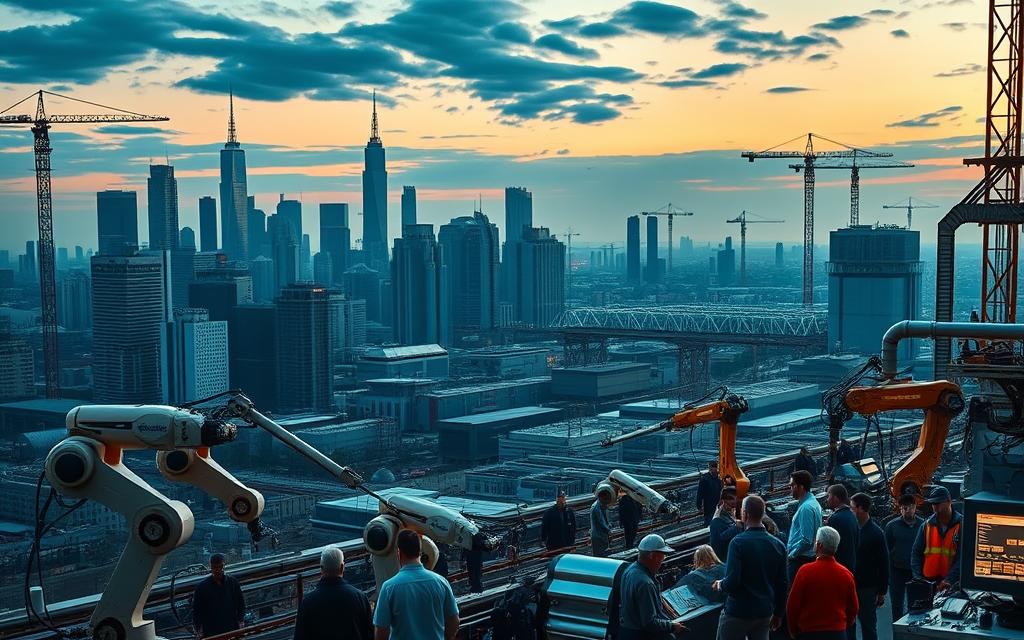
Intelligent systems have changed jobs a lot. Automation has taken over many jobs in areas like making things, moving goods, and doing office work. Studies say about 30% of jobs could be automated, leading to big changes in the workforce.
This change isn’t the same for everyone. Automation jobs mainly affect jobs that are repetitive or need a lot of thinking. But, they also create new jobs that need special skills. The problem is how to help workers get ready for these new jobs.
New Career Opportunities
Even with job losses, new jobs are being created. The digital world has brought up new careers that didn’t exist before. These include:
- Data scientists and AI specialists
- Cybersecurity analysts
- Renewable energy technicians
- User experience designers
- Blockchain developers
These new jobs often pay more and are better than the old ones. A study by MIT says tech creates more jobs than it takes away. But, we need to help workers through this change.
The Gig Economy and Digital Entrepreneurship
Technology has made it easier to work in flexible ways. The gig economy lets people earn extra money through freelance work and other services. But, it also raises questions about job security.
At the same time, starting a business is easier than ever. Digital entrepreneurship lets people start businesses with little money. This is a big chance for people to succeed.
“The digital economy isn’t just changing how we work—it’s redefining what work means and who can participate in value creation.”
We need to update rules and safety nets for the new ways of working. It’s important to keep up with innovation while also making sure everyone is protected.
Privacy Concerns in the Digital Age
Digital innovations bring many benefits but also raise big privacy issues. The ease of connected living comes with a cost in personal data protection. This affects both individuals and organisations.
Data Collection and Surveillance
Today’s tech allows for huge data gathering. Social media, search engines, and apps collect user info for business use. This also includes government surveillance.
Many people don’t know how much info is being collected about them. The Cambridge Analytica scandal showed how data can be used for political gain. This shows the big ethical questions around data collection.
Rules like GDPR in Europe and CCPA in California try to protect privacy. They give users more control over their data. But, enforcing these rules worldwide is hard.
Cybersecurity Threats
As we use more digital services, we face more cyber threats. Hackers keep finding new ways to get past security. These threats can steal identities or demand money for data.
The finance sector faces big cybersecurity challenges. Banks and payment systems are often targeted. Healthcare also struggles to keep patient data safe.
Recently, big data breaches have hit millions. The Equifax breach exposed 147 million people’s info. The Marriott International hack affected about 500 million guests.
These breaches show how important strong cybersecurity is. Companies need to invest in security and train their staff. People should use strong passwords and two-factor authentication.
Digital Footprint Management
Every online action adds to our digital footprint. This includes social media, search history, and online shopping. Managing this footprint is getting harder.
Many people share too much online without realising it. Social media makes it easy to share too much. Once shared, it’s hard to delete it completely.
To manage your digital footprint, you need to make an effort:
- Check your social media privacy settings often
- Only share location with apps you really need
- Use private browsing for sensitive searches
- Check and delete unused online accounts
- Think about using a VPN for extra security
Teaching people about digital footprint management is key. Schools and workplaces should teach digital literacy. This helps people make smart choices online.
As tech keeps changing, privacy will stay a big issue. We need to keep balancing innovation with protection. The future of digital privacy depends on our choices and policies today.
Mental Health and Social Implications
Technology brings many benefits, but its effects on our minds and society are deep. It changes how we think, interact, and see ourselves.
Too much device use can harm our mental health. It’s important to understand these effects to use technology wisely.
Screen Time and Digital Addiction
We spend a lot of time on screens, from phones to computers. This constant use can turn into an addiction.
Research shows that too much screen time changes our brain. It affects areas linked to rewards. The instant feedback from devices is very tempting.
Feeling anxious without our devices is common. This is called “nomophobia”. It can harm our sleep, work, and social life.
Spotting the signs of too much device use is key. Setting limits and tech-free times can help.
Social Comparison and Self-Esteem
Social media changes how we see ourselves and others. It shows perfect lives that are not real.
Seeing perfect images online can make us feel bad about ourselves. We compare our lives to others’ best moments.
Heavy social media use is linked to depression and anxiety, more in young people. The need to look perfect online is stressful.
Learning to see through online illusions is important. Making real-life connections helps us feel better about ourselves.
The Impact on Attention Spans
The digital world changes how we take in information. Notifications and multitasking make it hard to focus.
Too much tech use might shrink brain areas for thinking. This could make it hard to focus and think deeply.
Teachers and psychologists say digital natives have short attention spans. The quick content online trains our brains to expect fast changes.
Studies suggest we can improve our focus with effort. Digital detoxes and mindfulness help.
Using technology wisely and doing activities that need focus helps our brains. Reading, hobbies, and meditation can balance out the effects of digital use.
Environmental Considerations of Technology
Technology’s environmental impact is a big problem today. Digital innovations help solve ecological issues but also create big environmental costs. We need to manage and plan these costs carefully.

E-Waste and Sustainability Challenges
Fast-changing technology leads to a lot of e-waste worldwide. Millions of old devices with harmful materials end up in landfills every year. This is bad for the environment and our health.
Many places don’t have good recycling systems. This makes the problem worse. The need for new tech keeps growing, making sustainability a big issue for everyone.
Energy Consumption of Digital Infrastructure
Digital tech uses a lot of energy, like data centres that keep our online world running. These centres need constant cooling and work all the time. This adds a lot to global energy consumption.
The carbon footprint of our digital world goes beyond data centres. It includes network systems and devices we use. As online services grow, so does the energy they use. This is a big environmental problem.
Technology’s Role in Environmental Solutions
Even with these problems, technology can help protect the environment. New environmental technology is making it possible to tackle ecological issues.
Some key solutions include:
- Smart grid systems that improve energy use
- Precision agriculture tech that cuts down waste
- Advanced systems for pollution control
- Platforms for managing renewable energy
These innovations show how technology can reduce its own environmental harm. They also help solve bigger ecological problems. Developing sustainable tech is key to balancing digital progress with caring for our planet.
Like car emissions in climate talks, tech’s environmental effects need everyone’s effort. Both makers and users must choose more eco-friendly options throughout tech’s life cycle.
Cultural and Societal Transformations
Technology has changed our world in many ways. It has reshaped our culture and how we interact with each other. Now, we access information and entertainment differently, leading to both unity and division.
Changing Social Interactions
Digital platforms have changed how we connect. They allow us to talk to people all over the world instantly. But, they’ve also made our face-to-face talks less common.
Social media has created online communities that know no borders. These spaces are great for sharing cultures and ideas. Yet, they also make it hard to connect truly, as people often show only the best parts of their lives.
“We shape our tools and thereafter our tools shape us.”
Smartphones and social media have set new social rules. We expect quick replies and updates from our loved ones. This has changed how we behave in both our personal and work lives.
Digital Divide and Accessibility Issues
Technology is advancing fast, but not everyone has access. The digital divide is a big problem, separating those with tech from those without. It impacts education, jobs, and social life.
Several things cause this divide:
- Economic barriers to devices and internet
- Remote areas lack access
- Older people struggle with new tech
- People with disabilities face design issues
This issue is not just about internet. It’s about the quality of access, understanding tech, and having content in local languages. To solve this, we need help from governments, companies, and community groups.
The Evolution of Entertainment and Media
Technology has changed how we enjoy media. Streaming services have replaced old TV models, giving us access to lots of content anytime. This has opened up new chances for creators but also challenges old media.
Social media has become a place for entertainment too. Short videos and influencers have changed how we watch and make content. Now, we’re not just viewers but also creators.
This change brings both good and bad:
- More diverse content and voices
- Personalised content through algorithms
- Worries about similar content and filter bubbles
- New ways for creators and owners to make money
The world of entertainment is always changing. New tech like virtual reality is making experiences even more real. This shows how technology shapes our culture and fun activities.
Balancing Technological Progress with Human Values
As technology advances, we must think about how to balance it with human values. This balance is key and needs careful thought. We must consider how we develop, regulate, and use new technologies.
Ethical Considerations in Technology Development
Technology ethics are now more important than ever. Innovations like AI and biotech raise big moral questions. Developers and companies must think about the effects of their work before it’s released.
Ethical frameworks guide us in creating technology responsibly. These include values like transparency, fairness, and accountability. When companies focus on these, they make technology that helps people, not harms them.
There are several areas that need careful ethical thought:
- Algorithmic bias and discrimination
- Privacy protection in data collection
- Environmental impact of technology production
- Long-term societal consequences
Regulatory Frameworks and Governance
Good regulatory frameworks are key for technology development. They protect us while letting innovation grow. Governments are working on new ways to manage technology.
But, technology is changing faster than rules can keep up. We need flexible, adaptable rules to keep pace with innovation and protect us.
International cooperation is also vital as technology crosses borders. Standardising rules helps prevent companies moving to places with weaker laws.
Personal Responsibility in Digital Consumption
While rules and systems are important, personal responsibility is just as key. Our choices about technology shape our digital world.
By making informed choices, we can use technology wisely. This means thinking about privacy, digital health, and supporting ethical companies.
Learning about technology helps us make better choices. Knowing how it works lets us use it more critically.
In the end, finding a balance between technology and human values needs effort from everyone. This includes individual choices and global cooperation. Together, we can make sure technology benefits humanity.
Conclusion
The debate on technology’s impact is complex. It has many benefits, like better connectivity, healthcare, and education. But, there are also downsides, such as privacy worries and mental health issues.
Techno-optimism sees technology as a way to solve big problems. On the other hand, techno-pessimism warns us about the dangers of too much tech. Both views are important for figuring out technology’s future.
Using technology wisely is essential. We need to find a balance between new ideas and being ethical. This way, technology can help us and not harm us.
Our choices today shape the future of technology. By taking a balanced approach, we can use it for good. Let’s move forward with care and purpose.
