

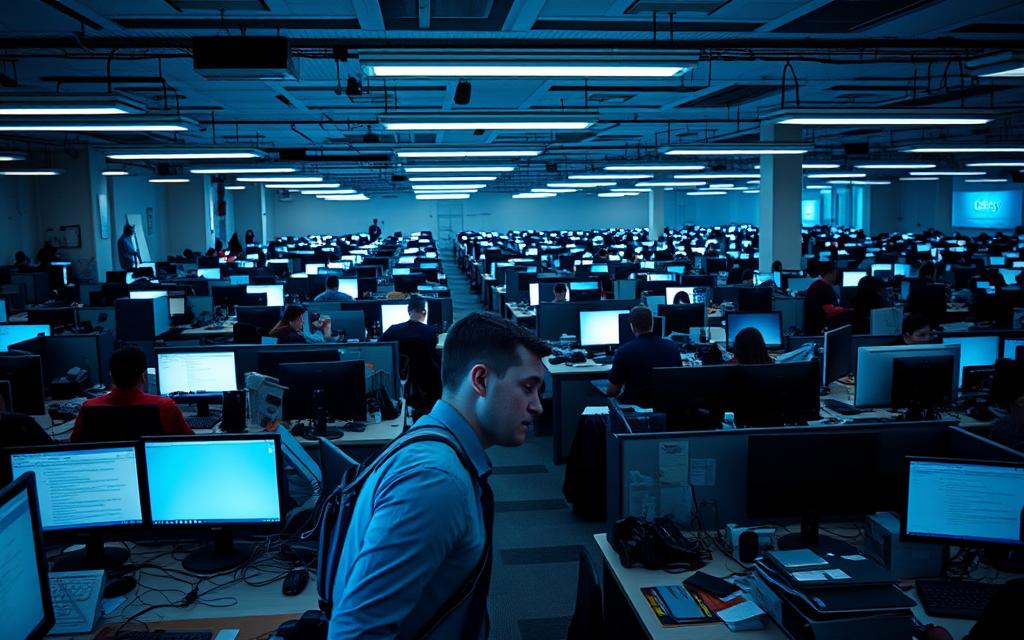
Technology is as vital as a car for our daily commute in today’s work world. It helps us communicate, manage our time, and run our businesses efficiently.
But, our dependence on digital tools brings a paradox. These tools, meant to improve our work, can actually hinder it. They introduce workplace technology drawbacks that challenge their own effectiveness.
This piece looks into the negative impact of tech at work. We go beyond the benefits to uncover the hidden costs. We’ll see how constant connection can break our focus, the mental toll of always being on call, and the big financial and security costs.
Our aim is to shed light on these technology productivity issues. We want to give businesses the knowledge they need to avoid these problems in our digital age.
The Digital Productivity Paradox
Workplace technology shows a strange contradiction. It promises to make work easier and faster but often does the opposite. This paradox happens when the tools meant to help us work better actually slow us down.
The modern workplace values being always connected. Tools like instant messaging and email keep us busy. But this constant connection breaks our focus and hinders deep work, which is key to real progress.
Many think multitasking is the best way to work efficiently. But research shows it can cut productivity by up to 40%. Our brains can’t handle doing many things at once well.
Notification systems are a big part of this problem. Every alert takes our attention away and makes us lose time to get back to work. These small distractions add up and hurt our work quality and amount.
Related Posts:
- Is Technology Making Life Better or Worse The Great Debate

- How Technology Can Help Us in the Future Solving…

- What Are Some Types of Technology A Guide to Tech Categories

- How Technology Contributed to Globalization…

- Is Cloaking Technology Real The Science of Invisibility

- How Technology Impacts Teaching and Learning Modern…

| Work Pattern | Estimated Focus Recovery Time | Productivity Impact |
|---|---|---|
| Single task focus | 0 minutes | Peak efficiency |
| Email interruption | 64 seconds | 15% decline |
| Instant message | 45 seconds | 12% decline |
| Multitasking (2+ tasks) | 3-5 minutes | 40% decline |
Technology is meant to make our work lives better. But if not used wisely, it can hinder our work. It often leads to reactive work instead of proactive, strategic work.
This decline in productivity isn't just about managing time. It's about our mental capacity. Every distraction takes away from our ability to think creatively and solve problems. Anyone researching disadvantages workplace productivity may also want to understand sma mean connectors antennas before deciding on the best option. Modern digital tools make us switch tasks often, leaving us mentally drained but less productive.
Realising this paradox is the first step to better technology use. By understanding how technology can both help and hinder us, we can use it more wisely. This way, we can benefit from technology without losing productivity.
What Are the Disadvantages of Technology in the Workplace?
Technology has changed work a lot, but it also brings big challenges. These problems affect how well we work. They mess up our workflow and how we think.

Constant Connectivity and Digital Distractions
Workplace tech is always on, leading to digital distractions at work. Employees get interrupted a lot:
- Social media notifications pull them away from their tasks
- Instant messaging needs quick answers
- Gaming apps on work devices are a problem
- Email alerts keep interrupting their focus
This constant distraction makes it hard to focus deeply. It takes about 23 minutes to get back into work after each break. This makes the day feel like a series of quick, reactive tasks instead of focused work.
Information Overload and Cognitive Drain
Today’s workplaces are flooded with too much information. This information overload is hard for employees to handle. The amount of digital data causes problems:
- Email inboxes are full of unread messages
- Cloud storage is disorganised
- There are too many ways to get information at once
- Real-time data needs constant checking
This flood of data makes it hard to focus. Employees spend more time sorting through info than doing actual work. Trying to find what’s important drains their mental energy.
Multitasking Myths and Focus Fragmentation
Multitasking is a big myth in tech. Studies show it’s really just switching tasks fast, which is bad for work.
Trying to do many things at once:
- Errors go up by up to 50%
- It takes longer to finish tasks
- Quality of work drops
- It makes you tired faster
Our brains can’t really do many things at once, research says. Switching tasks costs mental energy, which adds up all day. This makes us less productive and our work not as good.
Technology’s goal of making work easier often fails. Knowing these problems is the first step to fixing them.
Psychological Impacts of Workplace Technology
Digital tools meant to boost productivity often have hidden psychological costs. These tools can lead to mental health issues for employees.
Technology-Induced Stress and Burnout
Technostress is when technology causes anxiety instead of helping. It comes from two main sources: techno-overload and techno-invasion.
Techno-overload happens when too much information and fast work pace overwhelm employees. The need to answer messages quickly and deal with endless data leads to mental tiredness.
Techno-invasion is when devices like smartphones and laptops always demand our attention. This makes it hard to truly disconnect from work.
These issues lead to burnout from technology. This includes feeling emotionally drained, performing poorly, and being cynical about work.
The Erosion of Work-Life Boundaries
Today’s technology has erased the line between work and personal life. Laptops and smartphones at home keep us connected to work all the time.
This makes it hard to stop thinking about work. Many check emails during family meals or on weekends.
This affects personal relationships and happiness. To find a good work-life balance tech integration, we need to make a conscious effort and get support from our employers.
Companies need to understand that too much digital access hurts people. Without clear boundaries, technology meant to help can actually harm both work performance and employee well-being.
Security Vulnerabilities in the Digital Workplace
The digital world has changed how we work, making it easier for hackers to attack. Companies face threats that can steal data, stop work, and harm their image. It’s key to know these cybersecurity risks at work to protect well.
Data Breach Risks and Privacy Concerns
Data breaches are a big problem with digital work. When data gets into the wrong hands, it’s not just money lost. Companies might face fines, lawsuits, and a damaged reputation.
Common reasons for data breaches include:
- Weak passwords and bad login checks
- Outdated software with security holes
- Not controlling who can see what
- Mistakes when handling private info
Remote work makes keeping data safe even harder. Workers logging in from different places and devices open up more risks. Companies need strong security, like encryption and multi-factor login, and regular checks.
Phishing Attacks and Social Engineering Threats
Phishing attacks are getting smarter, trying to trick employees with fake emails. These scams look like they’re from people you trust. Hackers send emails that seem real, trying to get your login details.
Social engineering plays on people’s psychology, not just tech. It tricks workers into sharing secrets or passwords. Common tricks include:
- Urgent messages that skip security checks
- Scenarios that seem like emergencies
- Faking to be someone important in the company
- Building trust to get what they want
The remote work setup makes it harder to spot these scams. Without face-to-face checks, it’s tough to know if emails are real. Training that shows what real attacks look like can help employees stay safe.
Companies should use tech like email filters and link scanners. But the best defence is training that teaches people to spot scams.
Financial Implications of Workplace Technology
Workplace technology has more costs than just the initial price. It includes ongoing expenses that affect budgets. These costs are often overlooked but are very important.
Hidden Costs of Technology Implementation
When buying new tech, businesses often forget about extra costs. Licensing fees for software are a big part of these costs. They keep coming up every year.
Having IT staff is another big expense. Companies need to pay for their salaries, training, and benefits. This is because keeping tech running smoothly requires skilled people.
Setting up new tech can also be costly. Issues like customisation, data transfer, and making sure everything works together add to the bill. Sometimes, you need experts to help with these problems.
Maintenance and Upgrade Expenses
Fixing broken tech is a regular cost for businesses. Things like replacing parts or fixing devices add up. These costs come after the warranty ends, which can be a surprise.
Software updates are another regular expense. Companies often have to buy new versions to stay safe or work with others. These updates are usually necessary, not optional.

Upgrading systems can be a big financial choice. Tech changes fast, making old equipment useless soon. Companies must decide whether to keep using old tech or to upgrade everything.
When one part of a system needs updating, it can lead to more costs. This is because other parts might need updating too. It can turn a small upgrade into a big expense for the whole company.
These costs add up over time, putting pressure on a company’s finances. It’s important for businesses to plan their tech budgets carefully. This way, they can avoid unexpected costs and make smart tech investments.
Communication Challenges in Digital Environments
Digital tools aim to connect us easily, but they often create barriers. The move from talking face-to-face to screen-based chats brings unique problems. These can harm team work and make things less efficient.
Misinterpretation in Digital Communications
Text messages lack the depth of face-to-face talks. Without tone, facial expressions, or body language, messages can be misread. A quick message might seem rude when it wasn’t meant to be.
Studies show nearly 50% of digital messages are misunderstood. This gap causes conflicts, extra work, and wasted time fixing mistakes. The lack of quick feedback in digital chats makes things worse, leading to unnecessary loops.
“The digital medium strips away the human context that gives meaning to our words,” says Dr. Eleanor Davies, an expert in organisational communication. This lack of context often leads to wrong assumptions and misinterpretations.
The Decline of Face-to-Face Interactions
Remote work and digital tools reduce in-person chats. This lack of face-to-face interaction hurts more than just social bonds. It weakens trust and teamwork, key for success.
Dealing with complex issues and sensitive topics is harder online. We lose the non-verbal signals that help us understand and connect. The spontaneous ideas that come up in casual chats are less common.
This also slows down learning for new staff. They miss seeing how experienced colleagues communicate and make decisions. The informal learning that happens in offices is less frequent, slowing down skill growth and sharing knowledge.
Organisations need to remember that digital tools are not a full replacement for real talks. It’s important to mix digital tools with face-to-face meetings to keep communication strong.
Skill Dependency and Technological Obsolescence
Technology brings many benefits to work, but it also creates big challenges. The fast change in tech can make workers less skilled. This is because the tools meant to help can also make us rely too much on them.
Over-reliance on Specific Software Platforms
Many companies rely too much on certain software. This makes them weak when these systems go down. When tech fails, workers can’t do their jobs because they don’t have other ways to work.
Automated systems are convenient but they also have downsides. Workers might not get as good at solving problems because they rely on tech for everything. This includes simple tasks like calculations and making decisions.

- Work disruption during system outages or technical failures
- Diminished critical thinking as automation replaces manual processes
- Skill atrophy where employees forget basic capabilities they once mastered
This situation is called “techno-complexity”. It means systems are so complex that only a few people can understand them. This makes companies vulnerable.
Rapid Technological Changes and Training Gaps
Technology changes fast, leading to a big problem: systems become outdated quickly. This means companies need to keep updating and training workers all the time.
Keeping up with tech is hard for companies. They often struggle to match what their workers can do with what new systems need. This gap makes workers feel uncertain about their skills.
The training issue shows up in several ways:
- Not enough time for full training on new systems
- Not enough resources for training because of how complex tech is
- Workers get frustrated and less efficient when learning
- It costs a lot to keep training and getting certified
This cycle of always having to learn new things is hard on companies. It costs money and makes things less efficient. Workers have to keep up with new tools while doing their regular jobs.
The mix of relying too much on tech and it changing fast is a big problem. Companies need to find a way to keep up with tech without losing the skills that are important for work.
Strategies to Mitigate Technology-Related Productivity Loss
Technology brings challenges to the workplace, but there are ways to overcome them. Organisations can protect employee wellbeing and keep productivity high. The solution lies in structured approaches that tackle both personal habits and company policies.

Implementing Digital Wellness Programmes
Companies now see the importance of digital habits in employee wellbeing. Digital wellness programmes give staff tools to manage their tech use.
These programmes teach about screen time, breaks, and ergonomics. They also include mindfulness to spot when tech use is not helpful.
Successful programmes include:
- Workshops on digital boundaries
- Encouraging physical activity breaks
- Providing tech support resources
- Creating digital tool literacy facilitators
These steps help staff stay focused and reduce digital fatigue.
Establishing Clear Technology Usage Policies
Clear guidelines help technology support work, not hinder it. A good policy sets digital behaviour standards, protecting everyone.
Good policies cover work hours, communication, and data security. They encourage focused work by limiting certain apps and notifications.
Consider “focus hours” to reduce distractions. This helps maintain attention during the workday.
Review policies often to keep them up-to-date with technology changes. Involving employees in policy-making boosts its effectiveness.
Promoting Mindful Technology Consumption
Mindful tech use is a shift towards intentional digital engagement. It empowers employees to use tech wisely, not just react to it.
Training in digital literacy helps staff understand their tools. They learn to see if tech truly adds value or just adds complexity.
Key practices include:
- Setting clear priorities before using apps
- Having specific goals for tech sessions
- Evaluating tool value regularly
- Creating tech-free zones or times
This mindful approach turns tech from a distraction into a productivity tool. Employees develop healthy digital habits that support their work goals.
By combining these strategies, organisations create a balance. Technology supports human needs, leading to sustainable productivity that values both tech benefits and human limits.
Balancing Technological Advantages with Workplace Realities
The modern workplace needs a balanced view of technology. It’s not just good or bad; it’s how we use it that matters. Organisations must find the right balance to boost productivity.
Good workplaces see technology as a tool to help people, not replace them. They set rules for using digital tools that fit with their goals. They also invest in training and culture to make sure technology works well.
TECHNOLOGY IS A TOOL. NOT A CRUTCH. NOT A HINDRANCE.
Changing how we see technology is key to success. When tech controls us, we lose focus. The best approach is to use tech wisely, keeping human skills at the heart of our work.

Keeping a balance means always checking if tech is working as planned. We look at numbers and listen to what employees say. This helps us make sure tech is helping, not hurting.
The goal is to create a digital space that boosts human smarts. We choose tools that help us focus and communicate better. The right tech mix is unique to each company but always puts people first.
Smart companies use tech in a way that cares for their people as much as it boosts work. They know that even the best tech can’t fix bad management or a bad work culture. Instead, it should make good things even better.
Striking the right balance is the next big challenge for workplaces. The companies that will lead the way are those that use tech to lift human abilities without losing sight of what’s important.
Conclusion
Workplace technology is changing the game, but it comes with big challenges. This summary shows how digital distractions, stress, security risks, and hidden costs can harm our goals. It’s important to understand these issues.
Knowing about these problems is the first step to solving them. Companies should focus on keeping employees happy and data safe. Start with small steps, not big changes.
Introducing digital wellness plans, setting clear rules for tech use, and teaching mindful tech habits are key. These steps turn risks into benefits, keeping work both productive and enjoyable.
The main points are clear: use tech wisely but also manage its risks. This way, we can create a better, safer, and more productive digital work environment.
FAQ
What is the digital productivity paradox?
The digital productivity paradox is when technology, meant to make us more efficient, actually distracts us. It does this through constant notifications and being always connected. This can make us less productive, even though we have all this technology.
How does technology contribute to information overload in the workplace?
Technology brings a flood of emails, messages, and data. This can overwhelm workers, causing them to feel mentally tired. It’s hard to focus on important tasks and keep attention on complex work.
What is technostress and how does it affect employees?
Technostress is the stress and anxiety from using technology too much. It can make people feel like they’re always connected or overwhelmed. This can lead to burnout, mental fatigue, and a poor work-life balance.
What are the main security risks associated with workplace technology?
Big security risks include data breaches and phishing attacks. These can steal sensitive information or trick employees into installing malware. Human mistakes often make these risks worse, so training is key.
What hidden costs are involved in implementing workplace technology?
There are costs beyond the initial purchase. These include ongoing software fees, hardware repairs, and system upgrades. Also, the cost of IT support staff adds up, affecting budgets.
How can technology hinder effective communication among teams?
Tools like email and instant messaging can lead to misunderstandings. They lack tone and nuance. They also reduce face-to-face interactions, which are important for trust and complex discussions.
What is meant by skill dependency in relation to workplace technology?
Skill dependency happens when employees rely too much on specific software. This can make them lose basic problem-solving skills. If these tools fail or become outdated, productivity drops, and retraining is needed.
What strategies can businesses use to mitigate technology-related productivity loss?
Businesses can start digital wellness programmes to promote healthy tech use. They should also have clear tech policies to reduce distractions. Training that improves digital literacy and mindful tech use is also helpful.
How does technology blur the boundaries between work and personal life?
Devices like smartphones and laptops make it hard to disconnect from work. This can lead to longer workdays, less personal time, and more stress. It negatively affects overall wellbeing.
Why is multitasking considered a myth in the context of workplace technology?
Multitasking is actually rapid task-switching, which harms focus and increases errors. Technology, by providing multiple streams of information, often encourages this harmful behaviour.