

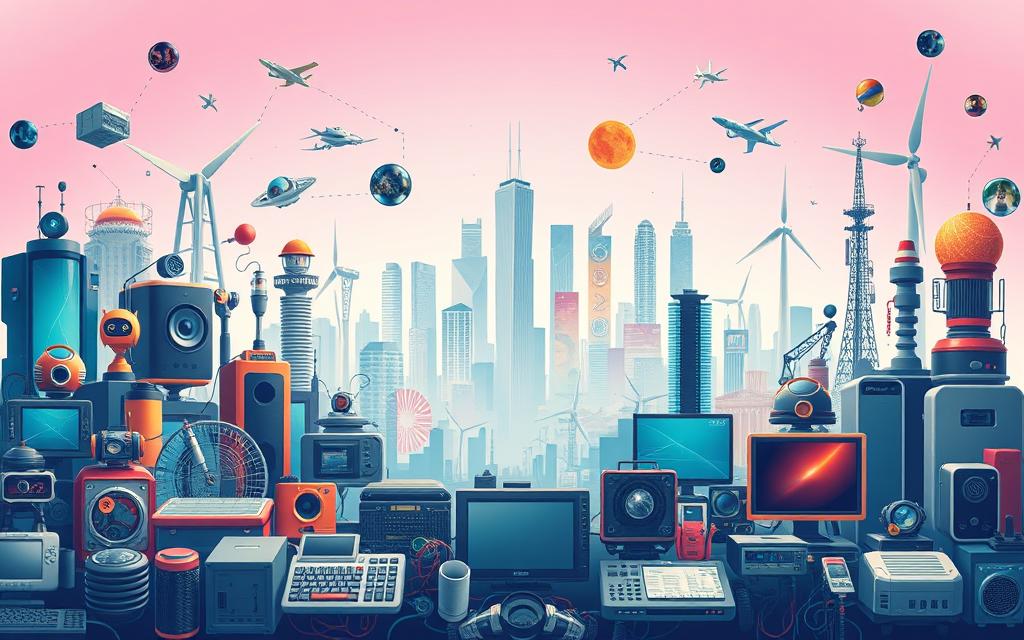
Technology is all around us, changing how we live and work every day. Knowing about the different tech categories helps us understand this digital world better.
There are many types of technology, like communication systems and medical innovations. Each one has its own role, but they often work together. This guide will show how these systems group together to drive progress today.
Knowing about tech categories helps us see how digital tools grow and work together. This knowledge is key as technology keeps getting better in all areas of life.
We’ll look at the main types of technology that shape our world. We’ll see how they make our lives easier and help businesses grow globally.
Understanding Technology and Its Evolution
Technology is our ongoing quest to change the world through new ideas and practical uses. It has grown from simple tools to complex systems that shape our modern society.
The Definition and Scope of Modern Technology
Modern technology covers the creation, development, and sharing of tech-based goods and services. It includes everything from electronics and computers to artificial intelligence and IT services.
The field has grown a lot from its early days. Now, it includes software development, internet services, and many other areas. This shows how our world is becoming more digital.
Today’s technology meets many human needs with new solutions. These range from communication tools to medical breakthroughs and environmental systems.
Related Posts:
- Is Technology Making Life Better or Worse The Great Debate

- How Technology Impacts Teaching and Learning Modern…

- How Technology Contributed to Globalization…

- How Technology Can Help Us in the Future Solving…

- The Disadvantages of Technology in the Workplace…

- Is Cloaking Technology Real The Science of Invisibility

Historical Development of Technological Categories
Technological progress has been exciting, from simple tools to complex systems. Early humans made tools for survival, and later, they developed farming and building technologies.
The Industrial Revolution was a big change in historical tech development. New manufacturing and transport technologies connected communities.
In the 20th century, electronic and digital technologies grew fast. Computers, phones, and the internet created new areas of innovation.
Recently, biotechnology, nanotechnology, and artificial intelligence have become key areas. Each new field builds on past ones, opening up new possibilities.
How Technology Classification Systems Have Evolved
Early systems grouped technologies by use and materials. They were mainly based on industry or main function, not complexity.
As tech advanced, systems got more detailed. New categories emerged to handle overlapping and interdisciplinary technologies.
Now, we have systems that handle both physical and digital tech. They include new areas like IoT and AI that don’t fit old categories.
Today’s systems use many ways to classify, like purpose, complexity, and how they work together. This flexible approach keeps up with tech’s fast pace while staying organised.
What Are Some Types of Technology: Major Categories Overview
Technology covers many areas that change our lives and work. These main categories are the base of today’s innovation.
Information and Communication Technologies
Information and communication technologies, or ICT, are key to our digital world. They include networks, software, and data management.
IBM has changed healthcare with ICT. These technologies help share data in real-time and work together from afar.
Industrial and Manufacturing Technologies
Industrial technology makes production better and quality control tighter. Automation and robotics are big steps forward.
John Deere’s farm equipment shows how tech improves farming. It makes farming more productive and needs less labour.
Biotechnology and Medical Technologies
Medical technology mixes biology and engineering for life-saving tools. This includes diagnostic gear, genetic research tools, and drug development systems.
Today’s hospitals use advanced medical tech for care and treatment. These innovations help people live longer all over the world.
Energy and Environmental Technologies
Energy technology is about making and using power in a green way. It includes solar and wind power.
Environmental tech tackles big ecological problems with new solutions. It helps clean up pollution and save natural resources.
These categories show how technology affects all parts of our society.
Information Technology and Digital Systems
Information technology is key to our digital world. It helps us handle, store, and share data well. This system has many parts that work together to support our digital lives.
Computer Hardware and Infrastructure
Computer hardware is the physical part of IT systems. It includes things like processors, memory, storage, and networking gear. Servers are at the heart of big systems, handling data and apps.
Today’s data centres use cool tech to keep things running smoothly. Virtualisation helps companies use their hardware better, making the most of what they have.
Software Development and Applications
Software development is about making apps that people need. Developers use many languages and tools to create everything from mobile apps to big systems.
Apps go through a life cycle to ensure they’re good and easy to keep up. Cloud services like AWS and Azure make it easier to get apps out there and grow them.
Networking and Internet Technologies
Networking tech lets devices talk to each other, locally or worldwide. Internet protocols make sure data can move smoothly between different systems.
Network security keeps data safe with firewalls, encryption, and more. These tools help make sure information is safe in both private and public networks.
Data Storage and Management Systems
Good data management systems keep info safe, easy to find, and in order. You can store data on servers or in the cloud, depending on what you need.
Database systems help organise data so it’s easy to get to and use. Companies have rules to keep data quality high and follow the law.
| Storage Type | Capacity Range | Access Speed | Typical Use Cases |
|---|---|---|---|
| Hard Disk Drives (HDD) | 1-20TB | 100-200 MB/s | Archival storage, backups |
| Solid State Drives (SSD) | 250GB-4TB | 500-7000 MB/s | Operating systems, applications |
| Cloud Storage | Scalable | Variable | Enterprise data, collaboration |
| Optical Storage | 4.7-128GB | 10-30 MB/s | Media distribution, archives |
Today, companies often mix different storage types. This way, they get the best of both worlds for their needs. It’s all about finding the right balance for data management.
Industrial and Manufacturing Technologies
Modern industrial settings have changed a lot thanks to new technologies. These changes make production smoother and more precise. They also make manufacturing more efficient.
Automation and Robotics Systems
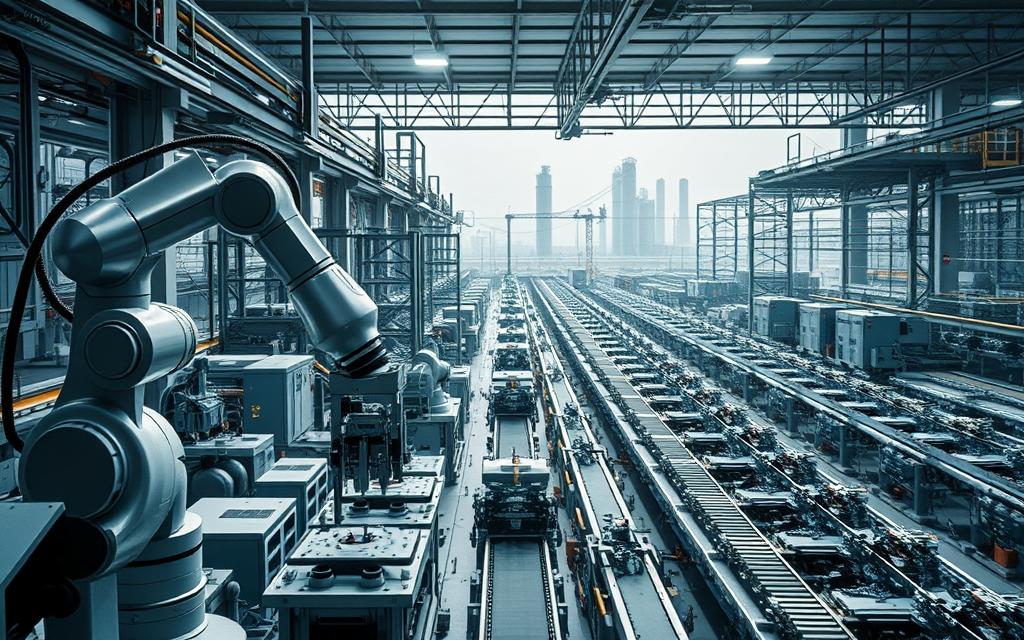
Automation is key in today’s manufacturing. Robots do tasks over and over again, fast and accurately.
Big names like ABB and Siemens make advanced robots for assembly lines. These robots cut down on mistakes and boost production a lot.
Additive Manufacturing and 3D Printing
Additive manufacturing is changing how we make things. 3D printing builds parts layer by layer with different materials.
This method speeds up making prototypes and custom parts. It’s also used in building for making big parts.
Computer-Aided Design and Manufacturing
CAD/CAM systems link design and making things. Engineers make detailed digital models before starting to make things.
These systems help make precise changes and test things before making them. This saves time and money.
Industrial Control and Monitoring Systems
Operational technology is essential for today’s industries. Systems like SCADA and PLC manage complex processes.
These systems control machines and check the quality of production. They help keep production steady and safe.
| Technology Type | Primary Function | Key Benefits | Industry Applications |
|---|---|---|---|
| Robotic Automation | Task execution | Precision, speed | Assembly, packaging |
| 3D Printing | Additive manufacturing | Customisation, prototyping | Aerospace, medical |
| CAD/CAM Systems | Design to production | Accuracy, efficiency | Engineering, manufacturing |
| Control Systems | Process management | Consistency, safety | Energy, automotive |
These technologies improve how we make things and lower costs. They make industries smarter and more responsive.
Biotechnology and Healthcare Innovations
Modern healthcare is changing fast, thanks to biotechnology. This field combines technology and health, making things that were once science fiction real.
New ways to diagnose and treat diseases are changing health care. Digital systems and biological research are working together. This is making patient care better all over the world.
Medical Devices and Diagnostic Equipment
Medical devices have come a long way. Companies like CMR Surgical are making robots for surgery. The da Vinci Surgical System is a great example of how robots help surgeons.
Diagnostic tools have also improved a lot. AI in imaging systems can spot problems better than humans sometimes. These include:
- High-resolution MRI and CT scanners with AI analysis
- Wearable devices for chronic conditions
- Quick diagnostic tests
- Smart implants that send health data
These tools help find problems early and treat them better. They are changing how we care for patients.
Pharmaceutical and Drug Development Technologies
The drug industry is using new tech to find and make medicines faster. AI is helping find new drugs, cutting down on time and cost.
Companies like CellCentric are using tech to tackle hard diseases. Machine learning helps researchers:
- Look through big molecular databases
- Guess how drugs will work
- Plan clinical trials better
- Make medicines just for you
This way, more drugs are being made, and it’s cheaper and faster.
Genetic Engineering and Genomic Technologies
Genetic engineering is now real, thanks to CRISPR. It lets us edit genes, which could cure some genetic diseases.
Genomics is getting cheaper and easier. Whole genome sequencing gives detailed genetic info for treatments. It’s used for:
- Gene therapy for genetic diseases
- Screening for genetic disorders
- Choosing the right medicine
- Targeted cancer treatments
Companies like OrganOx are looking into genetic tech for organ transplants. This could solve the problem of not enough organs for transplants.
Digital Health and Telemedicine Solutions
Digital health combines health care and tech. Telemedicine, like Teladoc, lets people get medical help from home. This is great for areas that don’t have enough doctors.
The digital health world has many parts:
- Remote monitoring
- Electronic health records
- Health apps
- AI for diagnosis
These tools help care for patients outside of hospitals. They let patients help manage their health and give doctors more info to make better decisions.
These technologies are making health care more personal, effective, and connected than ever.
Energy and Environmental Technology Solutions
Modern society faces two big challenges: keeping energy safe and protecting the environment. New technologies are key to solving these problems. They help us fight climate change and use resources wisely, leading to a greener future.
Renewable Energy Generation Technologies
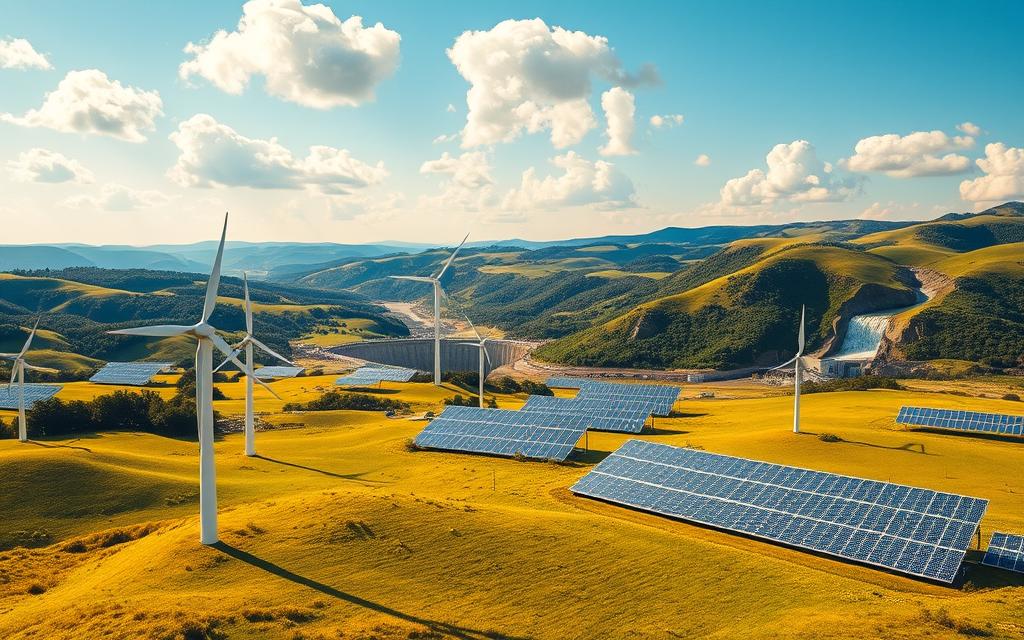
Solar and wind power are leading the way to cleaner energy. Solar panels turn sunlight into electricity, and wind turbines use wind to do the same. Both have become more efficient and cheaper over time.
Companies like Pod Point are making electric car charging systems that work with solar and wind power. This makes driving electric cars even better for the planet.
Energy Storage and Distribution Systems
Advanced batteries help solve the problem of renewable energy being unpredictable. They store extra energy when it’s made and use it when it’s needed. This makes sure we always have power.
Smart grids are another big step forward. They make electricity distribution smarter, cutting down on waste and making power more reliable. They do this by:
- Tracking energy flows in real-time
- Adjusting to changes in demand
- Combining different energy sources
- Keeping power on during outages
Environmental Monitoring and Conservation Technologies
Advanced sensors and satellites collect detailed environmental data. They monitor air and water quality, track deforestation, and follow wildlife. This data helps us understand and protect our planet.
Companies like Utopi create systems that manage energy use and monitor the environment. Their work shows how important environmental monitoring is for saving our planet.
Sustainable and Clean Technology Solutions
The clean tech sector focuses on reducing harm to the environment in many areas. It aims for a circular economy, less waste, and lower carbon emissions.
Electric car charging networks are a key example of clean tech in action. They use renewable energy, making cars much cleaner than traditional ones.
As these technologies improve, they help us reach global sustainability goals. They also meet our growing need for energy in a responsible way.
Transportation and Mobility Technologies
Technology has changed how we move around every day. Modern transport combines old engineering with new tech. This makes travel safer, smarter, and more efficient.

Automotive and Aerospace Technologies
The car industry has grown beyond just making cars. Now, vehicles have advanced systems like driver aids and connected tech. They also use lighter materials.
Aerospace tech has also improved. New engines and navigation systems make flying better. Both sectors focus on being green, safe, and efficient.
Smart Transportation Infrastructure
Smart infrastructure is key to modern transport. It uses sensors and cameras to watch traffic live. This helps manage traffic better.
Smart traffic systems adjust lights to ease congestion. They make travel smoother. Smart parking apps help find empty spots, saving time.
Electric and Autonomous Vehicle Technologies
Electric cars have changed car design with better batteries and charging. This move towards green transport is big.
Autonomous cars are a major leap forward. They use AI and sensors to drive on their own. Tesla’s Autopilot shows how far this tech has come.
These cars are getting better at driving by themselves. They’re moving towards full self-driving.
Logistics and Supply Chain Management Systems
Today’s logistics use tech to move goods better. They track items in real-time and predict needs. Automated warehouses help too.
Supply chain tech helps companies adapt fast. It shows the whole journey from start to finish. This makes things more efficient and cheaper.
The Internet of Things is vital here. It connects devices to check on goods during transport. This keeps products safe and of good quality.
Emerging and Cutting-Edge Technological Frontiers
The world of technology is changing fast, moving beyond old categories. New technologies are set to change industries and how we live. From AI to quantum systems, these areas hold exciting future possibilities.

Artificial Intelligence and Machine Learning Systems
Artificial intelligence and machine learning have gone from ideas to real-world uses. These technologies let computers learn from data and make choices on their own. They can handle huge amounts of information quickly.
Machine learning powers tools like recommendation engines and fraud detectors. It also helps with predictive analytics. The latest models, like GPT-4, show how far natural language processing has come. Readers exploring some tech categories often end up considering impacts teaching learning modern as part of the same topic. These systems keep getting better at understanding and responding to language.
Quantum Computing Technologies
Quantum computing is a big leap in how we process information. Unlike regular computers, quantum computers use qubits that can be in many states at once. This lets them solve problems that would take regular computers ages.
They’re being used for things like super-strong cryptography and finding new medicines. Big tech companies and research groups are working hard to make quantum systems work. They could change fields like materials science and finance a lot.
Nanotechnology Applications
Nanotechnology works with tiny things, like atoms and molecules. It makes materials and devices with special properties. It’s used in medicine, electronics, and materials science.
In healthcare, it helps with targeted treatments and better tests. Electronics get smaller and more efficient. Materials science creates stronger, lighter materials. The tiny scale of nanotechnology opens up new areas for innovation.
Virtual and Augmented Reality Systems
Virtual and augmented reality create digital worlds that mix with the real one. VR takes you to virtual places, while AR adds digital stuff to real spaces. Both have improved a lot recently.
They’re used in education, healthcare, and training. Doctors use VR for practice surgeries. Architects use AR to see designs in real places. The tech is getting better at making these experiences feel real.
| Technology | Current Applications | Future Potentials | Key Challenges |
|---|---|---|---|
| AI and Machine Learning | Fraud detection, personal assistants | Autonomous systems, advanced diagnostics | Ethical considerations, data privacy |
| Quantum Computing | Cryptography, molecular modelling | Climate forecasting, drug discovery | Hardware stability, error correction |
| Nanotechnology | Targeted drug delivery, advanced materials | Molecular manufacturing, energy storage | Manufacturing scale, safety concerns |
| VR and AR Systems | Training simulations, entertainment | Remote collaboration, enhanced interfaces | Hardware limitations, user adoption |
These new technologies are at the forefront of innovation. Each has its own special abilities and uses. As they keep getting better, they promise to change many areas of life. The next decade will likely see a big impact from these technologies.
Conclusion
Our look into technology types shows a wide range of areas. These include information systems, industrial automation, biotechnology, energy solutions, and new discoveries. Each one has its own role, working together to push forward our world.
The tech world is always changing and is key to our economy. New ideas keep coming, opening up fresh chances. From AI to green energy, tech is always moving forward.
Research from the University of Arizona Grantham shows tech’s worth depends on how we use it. A study on tech impacts shows how we use tech affects its results in many areas.
This summary on tech types stresses the need to keep up with tech news. As new areas appear and old ones grow, knowing what’s happening helps us make smart choices about tech.
FAQ
What are the main categories of technology today?
Today, technology is split into several areas. These include information and communication tech, and industrial and manufacturing tech. There's also biotechnology and medical tech, energy and environmental tech, and transportation and mobility tech. This discussion overlaps with cloaking real science invisibility, especially for readers comparing some tech categories with similar issues. New fields like artificial intelligence and quantum computing are also emerging.
How has technology classification evolved over time?
Over time, how we classify technology has changed a lot. It’s moved from just mechanical and electrical systems to digital, biological, and sustainable tech. Now, we include AI, IoT, and biotechnology in our classification systems.
What role does information technology play in modern businesses?
Information technology is key for businesses today. It helps manage data, communicate, develop software, and network. Cloud computing, enterprise software, and cybersecurity are vital for staying competitive and efficient.
How are robotics and automation used in manufacturing?
Robotics and automation boost manufacturing by improving precision, speed, and efficiency. They’re used for tasks like assembly, quality control, and design. This makes production smoother and faster.
What advancements are being made in medical technology?
Medical tech is advancing with AI for diagnostics, robotic surgery, and telemedicine. Genetic engineering and new drugs are also being developed. These advancements improve patient care and treatment results.
Why are renewable energy technologies important?
Renewable energy tech, like solar and wind, is vital for cutting carbon emissions and sustainability. They help switch to clean energy, improve energy security, and tackle global environmental issues.
How is technology transforming transportation?
Tech is changing transport with electric and self-driving cars, smart traffic systems, and better logistics. These changes aim to make travel safer, greener, and more efficient.
What are some examples of emerging technologies?
New tech includes AI for fraud detection, quantum computing for solving complex problems, and nanotechnology for materials. Virtual reality is also changing gaming and training with immersive experiences.
How do environmental technologies contribute to conservation?
Environmental tech helps conservation by monitoring air and water quality, managing waste, and protecting wildlife. It also promotes using resources wisely and fights climate change.
What is the significance of digital health solutions?
Digital health solutions, like telemedicine and health apps, make healthcare more accessible. They allow for remote care and tailored treatment plans. They’re changing how we get and experience medical services.